Talk to us

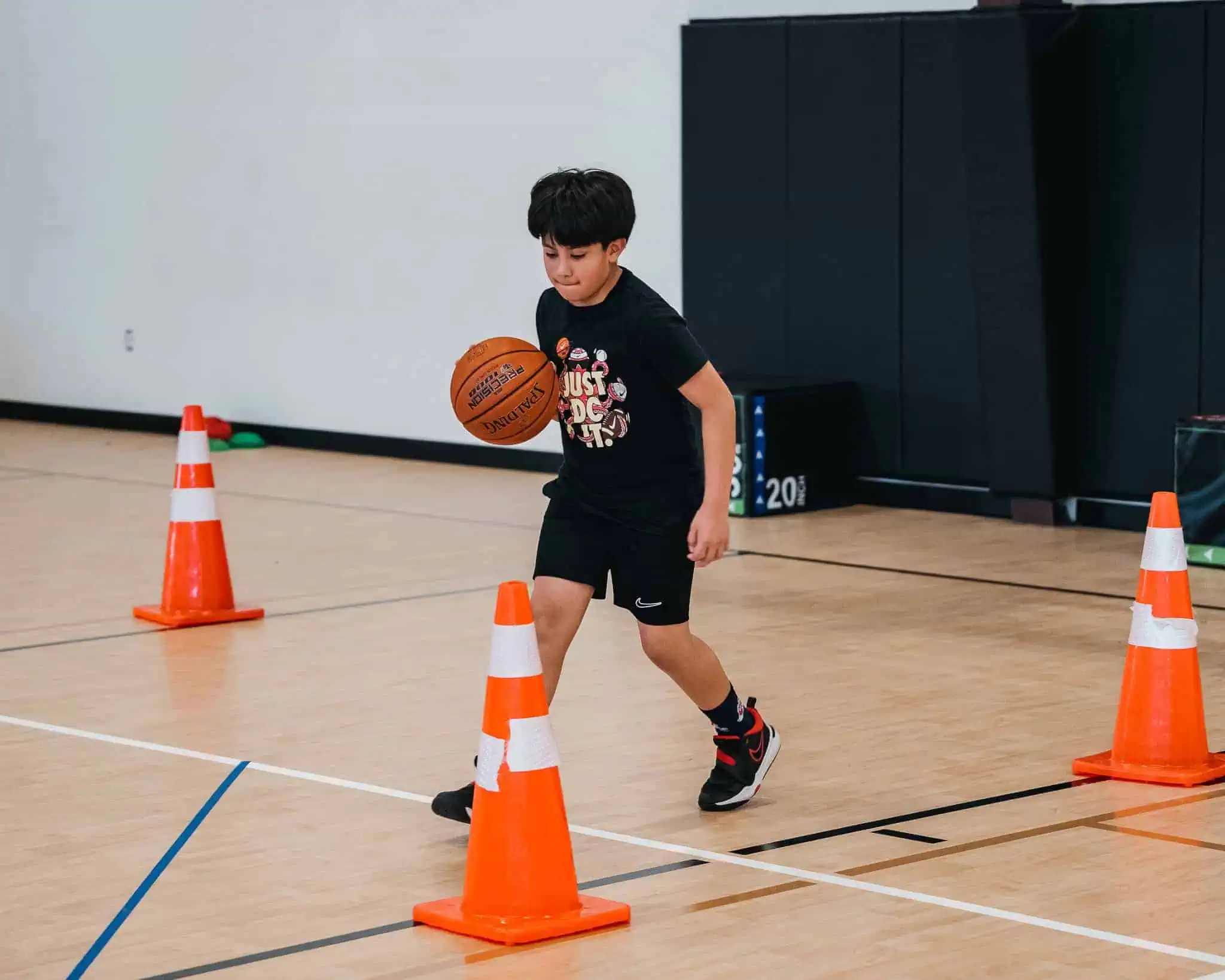
A basketball game can change in seconds. One moment, a player is jogging back on defense. The next, they are sprinting to stop a fast break, sliding to contain a drive, and running the floor again after a rebound.
That constant change of pace is what makes basketball physically demanding. For young players, building game fitness takes more than running laps. They need to practice accelerating, stopping, changing direction, recovering between efforts, and maintaining their skills when tired.
These basketball conditioning drills combine movement, ball handling, shooting, defense, and game situations to help youth players prepare for the pace of competition.
What Is Basketball Conditioning Drills?
Basketball conditioning drills is training that prepares players for the repeated bursts of movement required during a game. Unlike steady running, basketball involves short sprints, sudden stops, lateral slides, jumps, and brief recovery periods.
Conditioning can include shuttle runs, defensive slides, transition drills, and basketball skills performed after a short burst of movement. For young players, the goal is to improve fitness while maintaining good technique, not to finish every workout exhausted.
Why Are Basketball Conditioning Drills Important?
Well-planned conditioning helps players manage the physical demands of basketball while continuing to make good decisions.
- Repeated efforts: Players practice producing several strong efforts rather than relying on one fast sprint.
- Recovery: They learn to manage their energy between demanding plays.
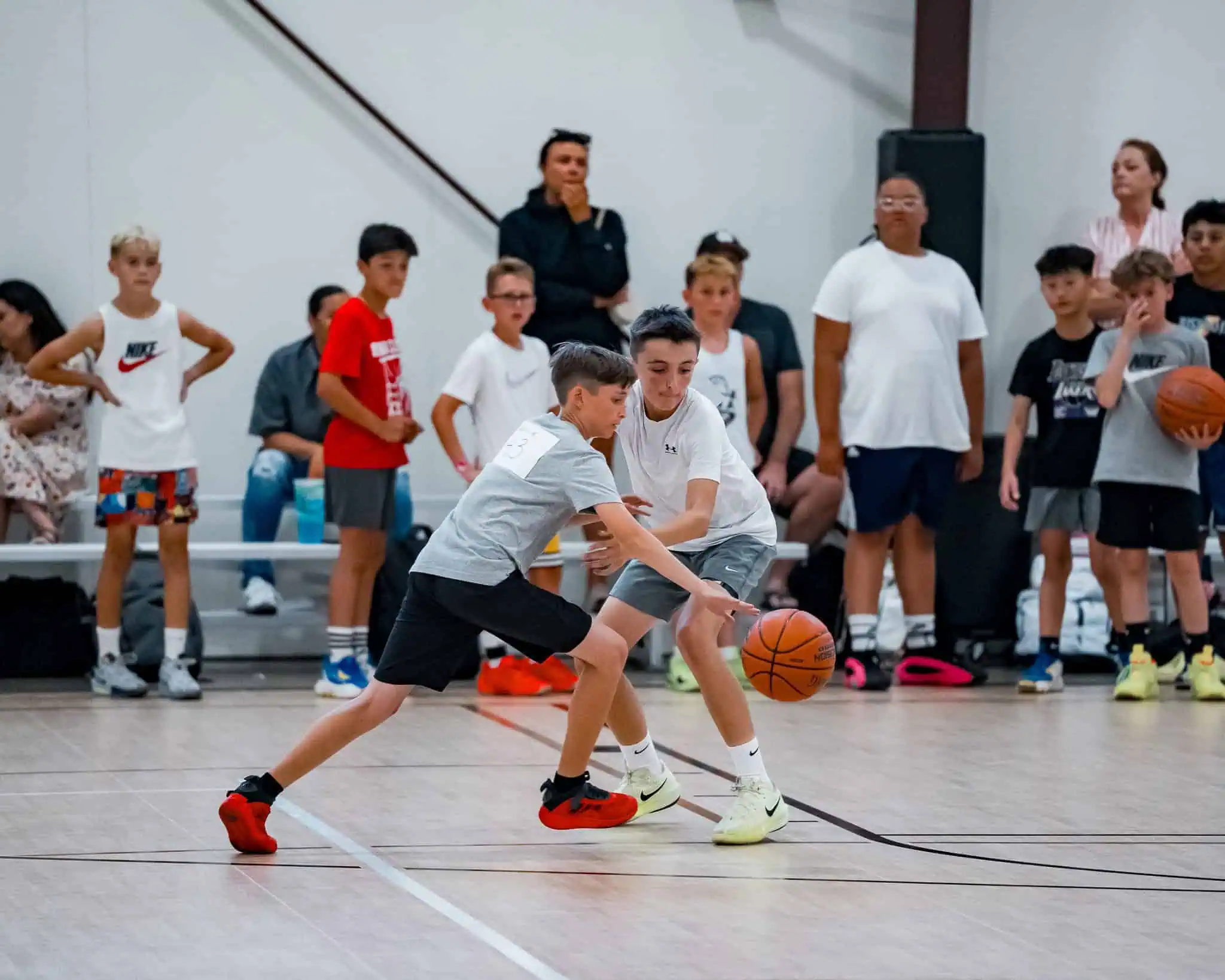
- Defensive movement: Slides, stops, and changes of direction prepare players for on-ball defense and transition recovery.
- Skills under fatigue: Dribbling, passing, shooting, and finishing become part of conditioning instead of being left out of fitness work.
- Game confidence: Players gain experience handling demanding sequences while keeping their movement and decisions under control.
Conditioning works best alongside regular skill development. Players should continue practicing basketball drills for all skill levels rather than replacing their skill work with running.
Best Basketball Conditioning Drills Without a Ball
Without-ball drills allow players to focus on movement, balance, acceleration, and defensive footwork. Start with controlled movements before increasing speed or duration.
1. Defensive Slide Circuit
Lateral movement, defensive footwork, and repeated effort.
How to do it:
- Place two cones about 10 to 15 feet apart.
- Start at one cone in a balanced defensive stance, with your knees bent and chest up.
- Push off your outside foot and slide toward the opposite cone without crossing your feet.
- Touch the cone, change direction, and slide back.
- Continue for 15 to 20 seconds, maintaining your stance throughout.
Reps: Complete 3 rounds, resting 30 to 60 seconds between rounds.
Make it harder: Have a coach call out a direction or add a controlled closeout at the end.
Best for: Beginners and youth players learning to move laterally without losing balance.
2. Modified Suicide Sprints
Acceleration, deceleration, and repeated sprint efforts.
How to do it:
- Start behind the baseline.
- Sprint to the near free-throw line, touch it, and return.
- Sprint to half court and return to the baseline.
- Repeat with the far free-throw line and opposite baseline.
- Walk and recover before the next run.
Reps: Start with 2 to 3 runs, resting 60 to 90 seconds between efforts.
Make it harder: Increase the number of runs gradually or add a controlled defensive slide between selected sprints.
Best for: Players who have learned to stop and change direction safely. Younger or less experienced players should begin with fewer lines and shorter distances.
3. Reaction Sprint Drill
First-step speed, reaction time, and responding to visual cues.
How to do it:
- Place three or four cones in different directions, approximately 5 to 10 feet from the starting point.
- Have the player stand in an athletic stance facing the coach.
- The coach points toward a cone or calls its color.
- The player reacts, sprints to the correct cone, and returns to the starting point.
- Allow the player to reset before the next cue.
Reps: Complete 6 to 8 reactions, then rest before repeating.
Make it harder: Add a jump stop before the player responds, or have a partner provide the cues.
Best for: Players who need to react quickly to changing situations on the court.
Basketball Conditioning Drills With a Ball
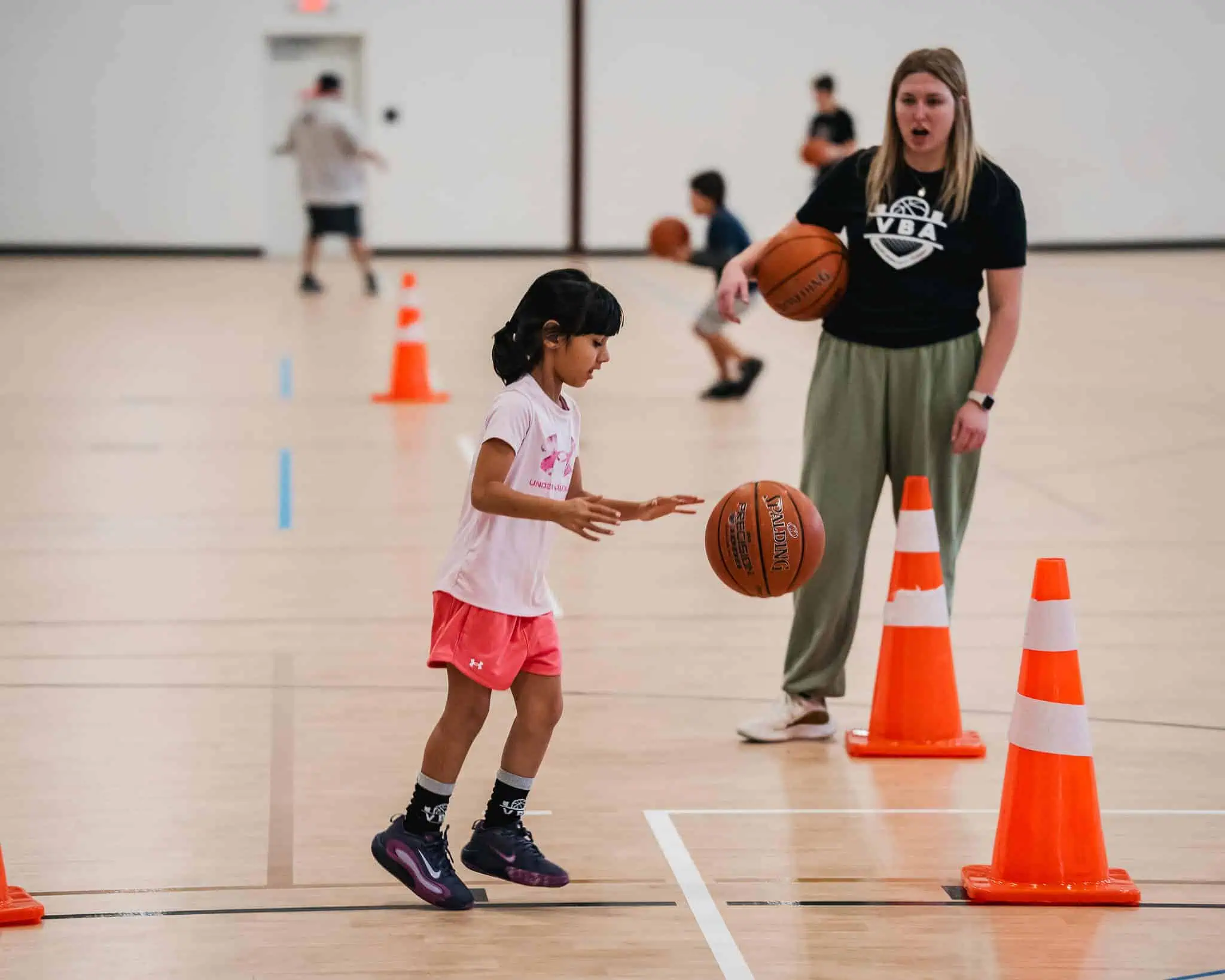
These drills combine physical effort with ball control and basketball skills. Players should move at a challenging pace without letting speed compromise their technique.
4. Full-Court Dribble and Finish
Ball control at speed, transition movement, and finishing.
How to do it:
- Start at one baseline with a basketball.
- Dribble toward the opposite basket at a fast but controlled pace.
- At half court, perform a familiar change-of-direction move.
- Accelerate toward the basket and finish with a layup.
- Walk back to the starting point and recover before the next attempt.
Reps: Complete 4 to 6 trips, then rest before another round.
Make it harder: Use the non-dominant hand for part of the trip or alternate finishing hands.
Best for: Players working to maintain ball control while moving quickly. For more focused ball-handling practice, pair this with basketball dribbling drills.
5. Three-Man Fast Break
Transition speed, passing, spacing, and teamwork.
How to do it:
- Place three players across the baseline, with one in the middle and one on each side.
- Move the ball up the court using quick passes while players fill separate lanes.
- Finish with a layup or another assigned shot.
- After the finish, have the group turn and run back on defense.
- Rotate positions so each player practices different roles.
Reps: Complete 4 to 6 fast-break possessions before taking a recovery break.
Make it harder: Add one or two defenders so players must make decisions rather than follow a fixed passing pattern.
Best for: Teams practicing transition offense and getting back on defense.
6. Fatigue Shooting Drill
Shooting preparation, footwork, and concentration after movement.
How to do it:
- Choose two or three shooting spots, such as the wing and corner.
- Position a passer or rebounder near the basket.
- Have the shooter sprint a short distance to the first spot.
- The passer delivers the ball, and the shooter takes a balanced shot.
- Rotate through the shooting spots, allowing enough recovery to keep the attempts controlled.
Reps: Take 3 to 5 shots from each spot before rotating.
Make it harder: Add a short dribble before the shot or move to a new spot after each attempt.
Best for: Players who want to practice getting into their shooting motion after running. Focus on shot quality, not just the number of attempts. You can also incorporate dedicated basketball shooting drills.
Basketball Sprint and Running Conditioning Drills
Sprint and shuttle work can help players prepare for repeated bursts of movement. The distances and recovery periods should match their current ability.
7. Court Shuttle Runs
Acceleration, stopping, turning, and repeated efforts.
How to do it:
- Start at the baseline.
- Sprint to the near free-throw line and return.
- Continue to half court and return.
- Progress to the far free-throw line and opposite baseline as appropriate.
- Walk back and recover before starting again.
Reps: Begin with 2 to 3 complete sequences.
Make it harder: Add a controlled jump stop or change the order of the marked lines.
Best for: Players learning to accelerate and decelerate repeatedly. Reduce the distance if their turning technique starts to break down.
8. Sprint-and-Recover Intervals
Repeated sprinting and recovery between efforts.
How to do it:
- Start at the baseline.
- Sprint to the opposite baseline at a challenging, controlled pace.
- Walk back to the starting point.
- Begin the next sprint once breathing and movement are under control.
- Aim to maintain similar effort and technique across repetitions.
Reps: Start with 4 to 6 sprints and adjust based on the player’s experience and recovery.
Make it harder: Gradually add a sprint or shorten the recovery period, but not both at once.
Best for: Players who need to practice repeated running efforts without turning every repetition into an all-out test.
9. The 17s Conditioning Drill
Repeated lateral court runs, changes of direction, and conditioning.
How to do it:
- Start on one sideline.
- Sprint across the court and reach the opposite sideline.
- Turn under control and sprint back.
- Continue until you complete the 17 sideline-to-sideline lengths required by your coach’s protocol.
- Record the time only if the team is using a consistent testing format.
Reps: Begin with a reduced number of lengths if the full drill is too demanding. Allow full recovery before another attempt.
Make it harder: Increase the number of quality repetitions gradually rather than rushing through the turns.
Best for: Experienced players whose coaches use the drill as part of a structured conditioning or fitness assessment.
Coach’s note: The 17s drill can be demanding. Do not apply a universal time target to every age group or playing position. Court dimensions, testing rules, and player experience affect results.
Game-Situation Basketball Conditioning Drills
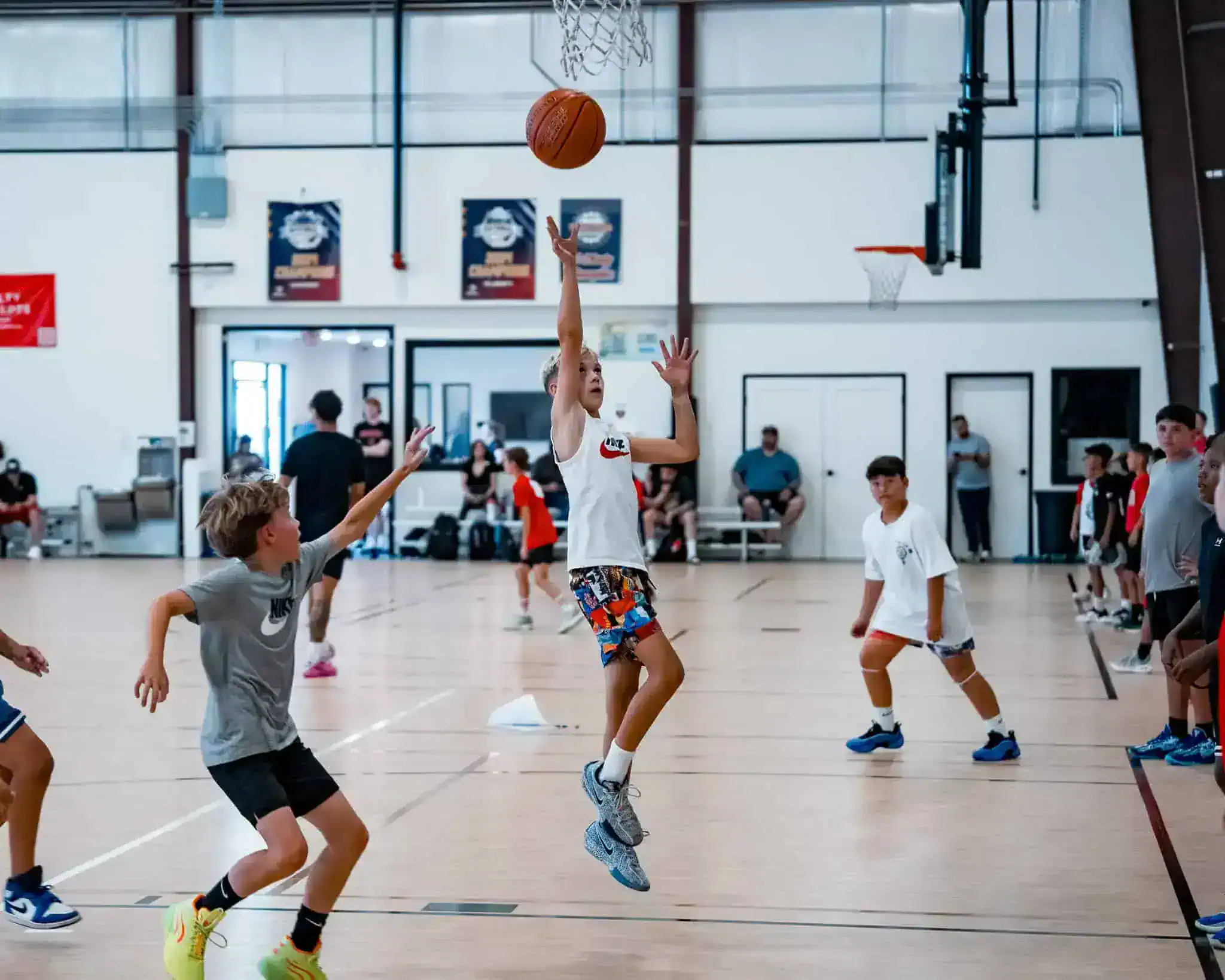
Game-based conditioning adds decisions, communication, and defense to physical work. These drills are useful when players have enough experience to perform the movements safely.
10. Two-on-Two Transition Conditioning
Transition decisions, communication, and repeated offense-to-defense movement.
How to do it:
- Set up two offensive players against two defenders.
- Play a live possession until a score, defensive rebound, or turnover.
- Transition toward the opposite basket, with each team switching roles.
- Stop after a short sequence to allow recovery and give feedback.
- Rotate in other players.
Reps: Play 3 to 5 short possessions per round, with recovery between rounds.
Make it harder: Add a third player to create a 3-on-2 situation or set a reasonable possession time limit.
Best for: Players who are ready to combine conditioning with live basketball decisions.
11. Shell Drill Conditioning
Team defense, closeouts, communication, and help positioning.
How to do it:
- Place four offensive players around the perimeter with four defenders matched up.
- Move the ball around the perimeter.
- Have defenders adjust their position on each pass, closing out to the ball and moving into help positions away from it.
- Require players to communicate their assignments.
- After several passes, allow the offense to attack and finish the possession with a shot or defensive rebound.
Reps: Complete 3 to 5 short possessions, then recover and review positioning.
Make it harder: Allow the offense to drive or cut after the initial passing sequence.
Best for: Teams learning to maintain defensive organization while moving repeatedly. Coaches can use the basketball defense drills resource for additional defensive practice ideas.
12. Skill-Under-Fatigue Circuit
Maintaining basketball technique after short bursts of physical effort.
How to do it:
- Station 1: Perform defensive slides, then receive a pass and take a balanced shot.
- Station 2: Complete a short shuttle run, collect a basketball, and finish with a layup.
- Station 3: Sprint to a cone, change direction with the ball, and pass to a teammate.
- Station 4: Complete a short sprint and return to a defensive stance.
- Rotate through the stations, then take a longer recovery break.
Reps: Complete 2 rounds to start, with approximately 15 to 20 seconds of work at each station and sufficient recovery between rounds.
Make it harder: Add a defender or a decision-making cue once players can perform the skills consistently.
Best for: Players who want to combine fitness and fundamental skills in one session.
Basketball Conditioning Drills With a Ball vs. Without a Ball
Both approaches have a place in a youth basketball program. The right choice depends on what the player needs to practice.
| Without a ball | With a ball |
|---|---|
| Defensive slides | Full-court dribbling and finishing |
| Reaction sprints | Fast-break passing |
| Shuttle runs | Transition layups |
| Sprint-and-recover intervals | Fatigue shooting |
| Movement and footwork circuits | Skill-under-fatigue circuits |
Without-ball drills are useful when the priority is movement quality, speed, or defensive footwork. With-ball drills add ball control and basketball decisions. Combining the two helps players work on fitness without losing valuable time for skill development.
How Often Should Young Players Practice Conditioning Drills?
There is no single weekly schedule that suits every player. Conditioning needs depend on age, experience, team practices, games, other training, and recovery.
- Beginners: Start with short movement games, basic slides, and simple shuttle runs. Focus on learning technique rather than completing a high number of repetitions.
- Developing youth players: Include brief conditioning blocks within basketball practice, adjusting the workload around games and other activities.
- Experienced and high school players: Use a mix of sprint work, skill-based conditioning, and game situations. Coaches should account for the demands of team practice and competition.
Conditioning does not need to be a separate, exhausting workout every time. Short, purposeful blocks can be integrated into practice. Allow players to recover between demanding efforts, provide water breaks, and reduce the workload when movement quality declines.
Common Basketball Conditioning Mistakes to Avoid
1. Using conditioning as punishment
Conditioning should have a clear training purpose. Using running only as a consequence can make fitness work feel disconnected from learning the game.
2. Relying only on long-distance running
General running can help build endurance, but basketball also involves short bursts, sudden stops, lateral movement, and changes of direction. Include drills that reflect those demands.
3. Ignoring stopping technique
Players need to learn how to slow down, plant, and change direction under control, not just how to sprint faster. Reduce the speed or distance when technique starts to deteriorate.
4. Doing too much too soon
A young player does not need to finish every session exhausted. Build the workload gradually and adjust it to the player’s experience and schedule.
5. Sacrificing skill practice
Conditioning should support basketball development, not replace shooting, passing, ball handling, defense, and decision-making.
6. Ignoring recovery
Repeated hard efforts without enough rest can cause technique and effort to decline. Plan recovery periods and give players time to adapt to training.
Closing Thoughts
Good basketball conditioning prepares players for the way the game actually unfolds. They need to sprint, stop, change direction, recover, and make decisions without losing control of their skills.
Start with a few drills that match the player’s current ability, then build gradually. A mix of movement work, sprint intervals, ball-handling exercises, and game-based drills can make conditioning more relevant to basketball and more engaging for young athletes.
For players who want structured practice and guidance, Valley Basketball Academy offers basketball development opportunities in Fresno. The goal is to keep building fitness alongside the skills and decision-making players need on the court.
Ready to put your skills to work?
FAQs
-
What are the best basketball conditioning drills?
Defensive slides, modified suicide sprints, shuttle runs, sprint-and-recover intervals, transition drills, and skill-under-fatigue circuits are useful options. A balanced plan includes different movement patterns and adjusts the workload to the player’s ability.
-
How often should youth basketball players practice conditioning?
The right frequency depends on age, experience, practice schedules, and games. Many youth programs can include short conditioning blocks within regular practices, with enough recovery to maintain good technique.
-
What are good basketball conditioning drills for beginners?
Beginners can start with short defensive slide circuits, reaction sprints, simple shuttle runs, and controlled dribbling drills. Focus on balance and movement technique before increasing speed or repetitions.
-
Can you do basketball conditioning drills without a ball?
Yes. Defensive slides, shuttle runs, reaction sprints, and sprint-and-recover intervals can all be performed without a basketball. These drills are useful for focusing on footwork and movement.
-
What are basketball conditioning drills with a ball?
These combine physical movement with basketball skills. Examples include full-court dribbling and finishing, fast-break drills, transition layups, fatigue shooting, and skill-under-fatigue circuits.
-
What is the 17s basketball conditioning drill?
The 17s drill involves repeated sideline-to-sideline runs across a basketball court. Coaches may use it as a conditioning exercise or assessment, but the exact protocol and performance expectations should be consistent and appropriate for the players completing it.
-
Is running enough to improve basketball conditioning?
Running can improve general endurance, but basketball also requires acceleration, stopping, lateral movement, changes of direction, and repeated recovery. Basketball-specific drills help players practice these demands while maintaining their skills.
-
How can players improve their basketball stamina?
Build fitness gradually with a combination of short running intervals, defensive movement, basketball skills, and game-based drills. Consistent practice, appropriate recovery, hydration, and sufficient sleep also matter.