Talk to us

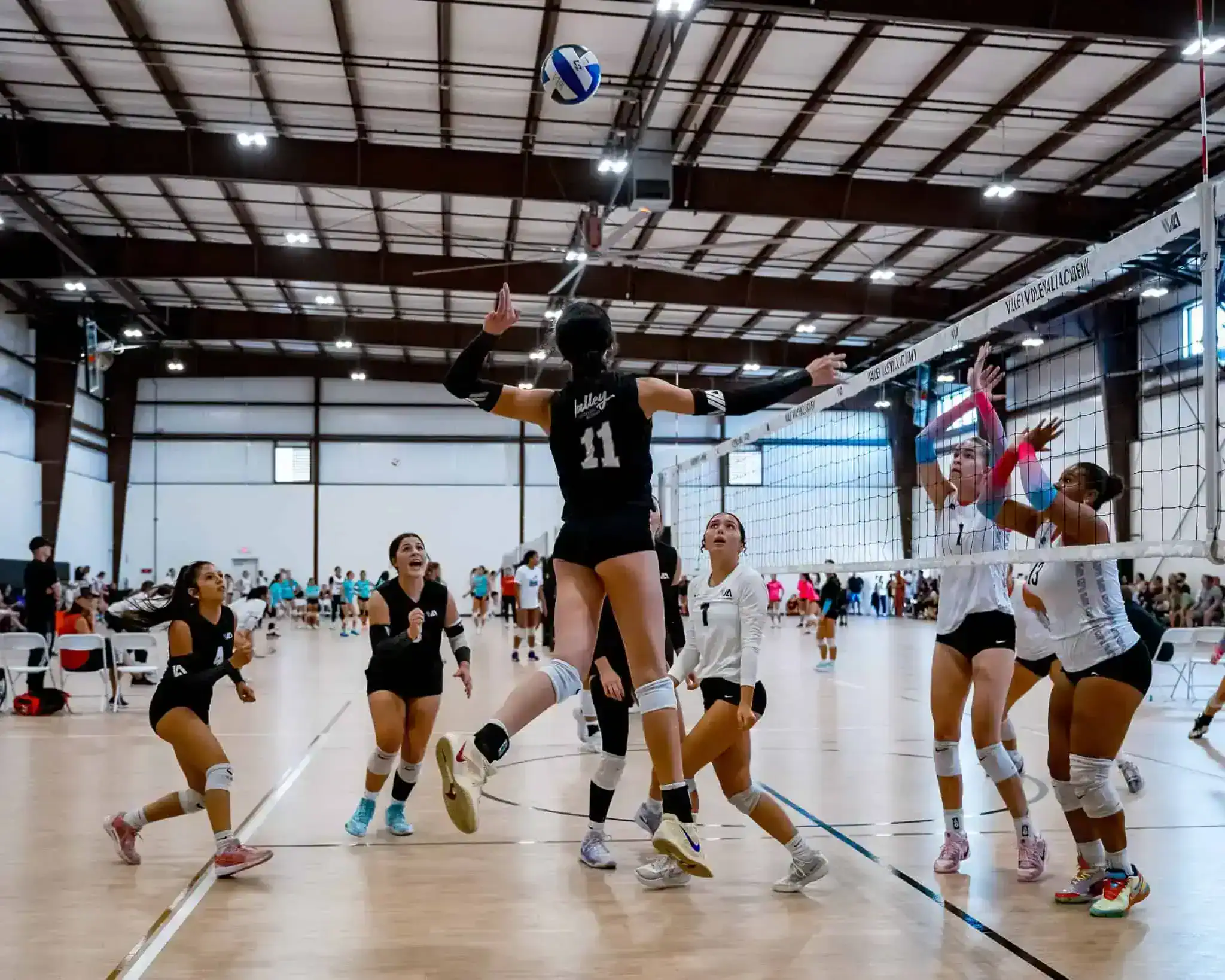
If you’ve ever watched a volleyball match and wondered why players keep changing places on the court, you’re not alone.
Volleyball rotations are one of the most important concepts in the game, yet they’re often confusing for beginners, parents, and even new players. Understanding how volleyball rotations work helps players stay in the correct position, avoid rotation violations, and transition smoothly into offense and defense.
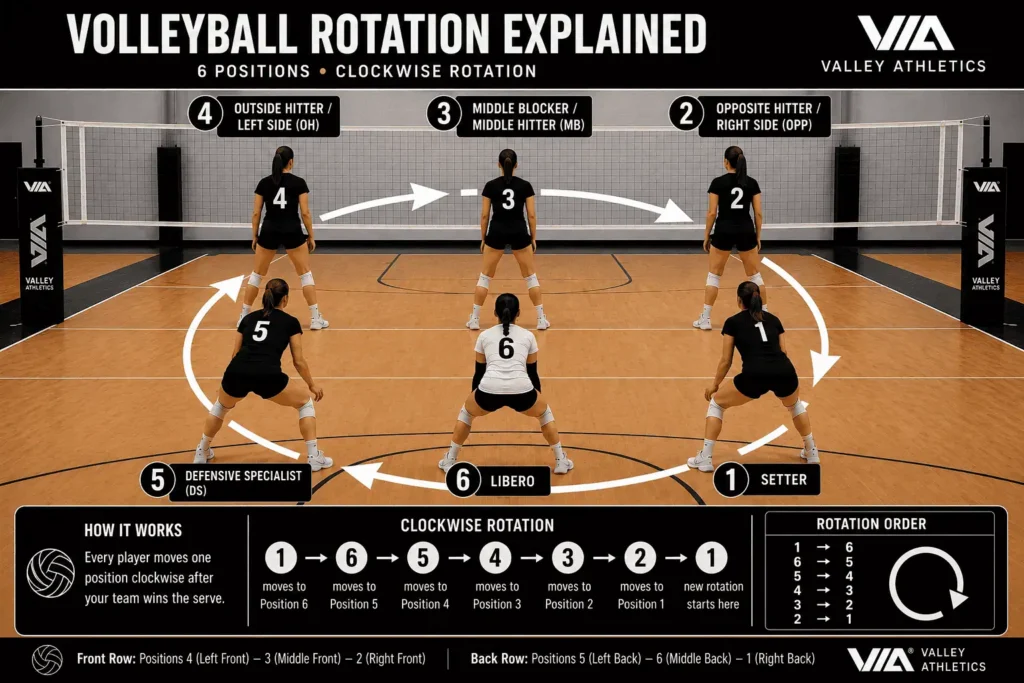
In volleyball, all six players rotate clockwise whenever their team wins the right to serve. While players must start each rally in a specific rotational order, they can move into their specialized positions once the ball is served. This system allows teams to maintain fairness while still using designated setters, hitters, liberos, and defensive specialists.
In this guide, we’ll explain volleyball rotation rules, court positions, overlap violations, and the most common systems used by teams today, including the 4-2, 5-1, and 6-2 rotations.
What are Rotations in Volleyball?
Volleyball rotations refer to the mandatory clockwise shift of all six players after a team wins a rally while the opposing team was serving (a “side-out”). Players rotate one position at a time so everyone cycles through both front-row attacking and back-row defending duties over the course of a match, but they must strictly maintain their relative positions until the ball is served.
6 Volleyball Positions
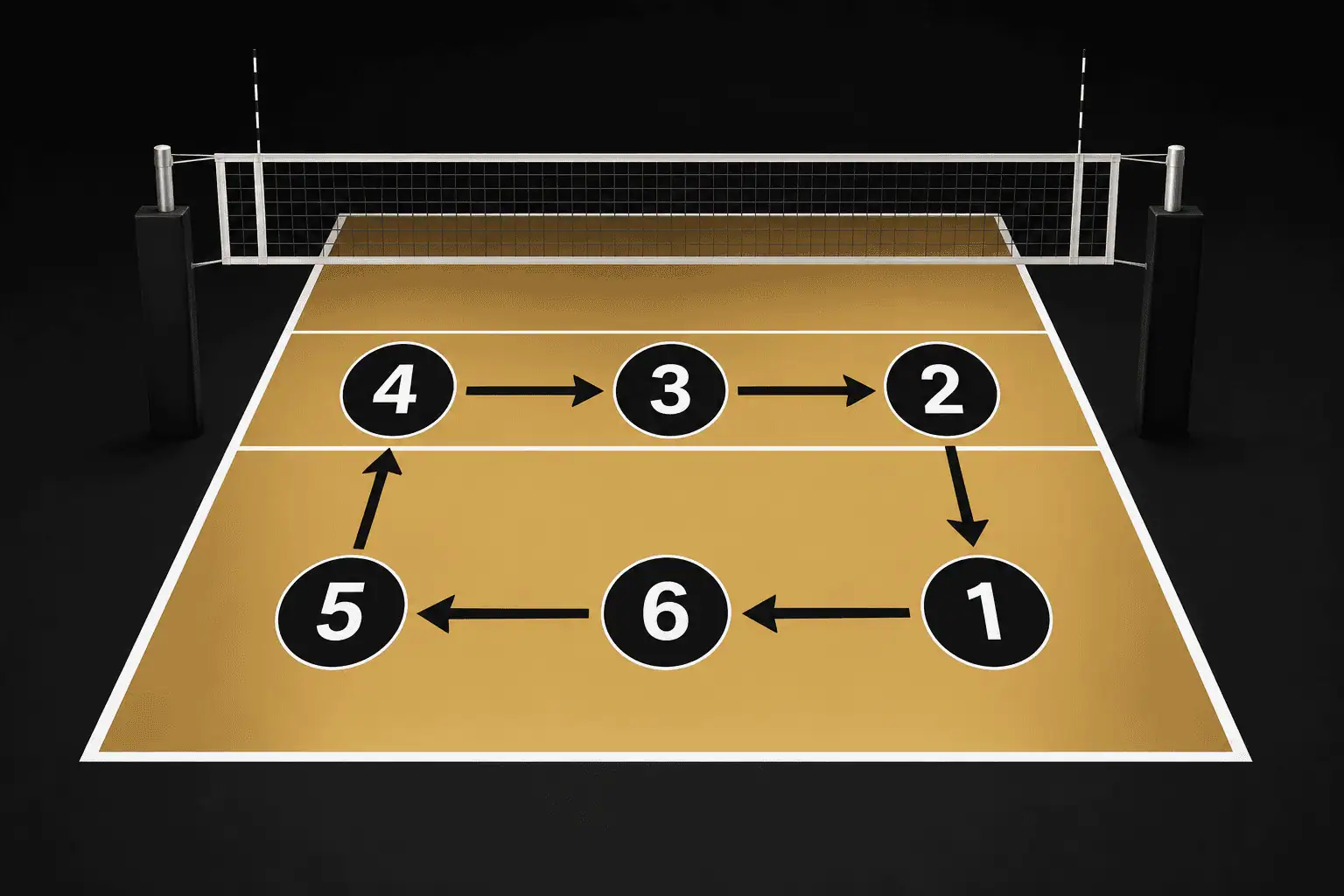
Every volleyball court is divided into six zones, and referees, coaches, and rotation charts all refer to them by number, not just direction. Here’s how the numbering works:
| Zone | Location | Row |
|---|---|---|
| Position 1 | Right-Back (where the server stands) | Back row |
| Position 2 | Right-Front | Front row |
| Position 3 | Middle-Front | Front row |
| Position 4 | Left-Front | Front row |
| Position 5 | Left-Back | Back row |
| Position 6 | Middle-Back | Back row |
These numbers describe court locations, not player roles. It’s important not to confuse a volleyball rotation zone (1 through 6) with a volleyball player’s position, like setter, outside hitter, or libero. A player’s zone changes constantly throughout a match, but their role on the team stays the same.
How Does Rotation Work in Volleyball?
Volleyball rotation determines exactly where each player must stand at the moment of serve. Every time a team wins the serve back from its opponent, all six players shift one spot clockwise before that next serve goes up. Whoever lands in Position 1 becomes the server. Once the ball leaves their hand, players are free to move into whatever spot suits their role, like a setter sliding up to the net.
Here’s the rotation pattern:
- Position 1 → Position 6
- Position 6 → Position 5
- Position 5 → Position 4
- Position 4 → Position 3
- Position 3 → Position 2
- Position 2 → Position 1 (where the new server stands)
Every player rotates through all six court positions throughout a set.
Why Do Players Rotate in Volleyball?
Rotation is designed to ensure that every player participates in both offensive and defensive phases of the game rather than staying in one area of the court permanently.
Rotations help:
- Create fairness among players
- Develop all-around volleyball skills
- Prevent players from remaining at the net all game
- Encourage teamwork and strategic positioning
- Create opportunities for different offensive systems
Once the serve is contacted, players can quickly move into their assigned roles and team formations.
Understanding Front Row and Back Row Rotations
| Court Zone | Positions | Main Responsibilities | Can Attack Above the Net? | Can Block? |
|---|---|---|---|---|
| Front Row | Position 2 (Right Front), Position 3 (Middle Front), Position 4 (Left Front) | Attacking, blocking, net play, quick offensive plays | Yes | Yes |
| Back Row | Position 1 (Right Back), Position 6 (Middle Back), Position 5 (Left Back) | Defense, serve receive, ball control, court coverage | Only from behind the attack line | No |
What Is the Volleyball Overlap Rule?
The overlap rule is one of the most important volleyball rotation rules.
Before the server contacts the ball, players must maintain the correct relationship with teammates in their row and column. After the serve, players can move freely into their preferred positions.
Front-to-Back Overlap Rule:
The front-row player must remain closer to the net than the corresponding back-row player.
Examples:
- Position 2 must be in front of Position 1
- Position 3 must be in front of Position 6
- Position 4 must be in front of Position 5
Left-to-Right Overlap Rule:
Players must also maintain proper side-to-side positioning.
Examples:
- Position 4 must remain left of Position 3
- Position 3 must remain left of Position 2
- Position 5 must remain left of Position 6
- Position 6 must remain left of Position 1
After serving contact, players may immediately move to their designated positions.
Why is Volleyball Rotation Important?
If you’re managing a court or organizing games at your gym, helping players understand rotation makes your space feel more professional and welcoming. Here’s why it matters:
- Keeps games fair by giving everyone a turn in each spot
- Avoids confusion and delays during play
- Prevents illegal serves or position faults
- Makes your facility more beginner-friendly
- Helps build confidence in new players learning the game
Whether it’s for league play or casual games, having a clear idea of rotation in volleyball helps things run more smoothly.
Volleyball Rotation Rules
Here’s what you need to know before jumping into a game:
- Six Positions: Every team has six players on the court, each rotating through six numbered zones: three in the front row and three in the back.
- Rotation Order: Players rotate clockwise whenever it’s time to switch. Think of it like moving one seat to your right every time your team wins the serve back.
- When to Rotate: Rotation happens after your team wins a point on the opponent’s serve. This is also called a “side-out.”
- Libero Exception: The libero doesn’t follow the usual front-row rotation. They only play in the back row and have special substitution rules, often entering without needing a formal sub.
- Consequences of Errors: If players are out of position when the ball is served, it’s called a rotation fault (or overlap fault), and the other team gets the point. That’s why getting the positions right is important.
What Are the Different Types of Volleyball Rotations?
Rotations dictate where players stand before the serve, but the “system” a team runs determines what those players actually do during the rally. Depending on your team’s skill level and roster, there are three common systems:
4-2 Volleyball Rotation (Great for Beginners)
In a 4-2 volleyball rotation, there are two setters on the court, and one is always in the front row setting. This makes it easier for players to focus on basic skills, since setters only operate from the front row. It’s the best choice for beginners or casual games where learning the fundamentals is the goal.
6-2 Volleyball Rotation (Good for Intermediate Players)
In a 6-2 volleyball rotation, the two setters always set from the back row. That way, the front row always has three attackers available, which makes the offense stronger. This setup is common in high school or competitive recreational leagues, especially for rosters without one dominant setter.
5-1 Rotation Volleyball (Advanced Play)
A 5-1 rotation volleyball system uses one main setter who plays all the way around the court. In three rotations the setter is in the front row, and in the other three they’re in the back row, giving three front-row attacking options. This gives a team one consistent leader running the offense, but it requires a skilled, experienced setter. It’s popular in serious club leagues and college-level play.
The right system depends on your roster’s experience level and whether you have one standout setter or two solid ones. Beginners and youth teams typically start with 4-2, intermediate teams often move to 6-2, and competitive teams grow into 5-1 as their setter develops.
4-2 vs 5-1 vs 6-2 Volleyball Rotations
The breakdown below outlines the key differences between the formations.
| System | Hitters & Setters | Front-Row Hitters | Best For | Pros & Cons |
|---|---|---|---|---|
| 4-2 | 4 hitters, 2 setters | Always 2 | Beginners & youth teams | Pros: Easy for new players to pick up, since there’s no complicated rotation to track. Cons: Opponents can read the offense quickly, since only two hitters are ever available. |
| 5-1 | 5 hitters, 1 setter | Shifts between 2 and 3 | Advanced and pro-level teams | Pros: One setter runs every rotation, giving the offense a steady, predictable rhythm. Cons: When that setter rotates into the front row, the team is left with just two attacking options. |
| 6-2 | 4 hitters, 2 setters | Always 3 | Intermediate through varsity teams | Pros: Keeps three attackers active in the front row at all times, putting constant pressure on the opposing block. Cons: Needs two players who can both set and hit well, so set quality can vary between them. |
How to Teach Volleyball Rotations to Beginners?
If you run practices, open gyms, or youth clinics, these steps make teaching rotations much easier:
- Use Court Markers or Cones: Mark all six rotation spots. This gives beginners a visual reference.
- Walk Through the Rotation Slowly: Have players move clockwise together while calling out the position number.
- Use Whiteboard Diagrams: Drawing the court helps players picture where they belong.
- Practice “Serve → Transition” Repeatedly: Teach players to rotate into position, serve, then shift into their base positions.
- Reinforce Back-Row vs Front-Row Responsibilities: Explain who can attack at the net and who must stay behind the attack line.
- Let Them Learn Through Mini-Games: Small-sided games like “3-on-3 with rotation” build understanding quickly.
Conclusion
Understanding volleyball rotations is essential for smooth, fair, and strategic gameplay, whether you’re coaching, hosting open gyms, or training new players. When athletes know where to stand, how to transition, and what their role is in every rotation, the entire game becomes more organized and enjoyable.
At Valley Athletics, we believe great games start with solid foundations, and knowing how volleyball rotations work is one of the first steps. Whether you’re setting up casual games, training sessions, or tournaments, a clear understanding of volleyball positions and rotations helps players perform better and enjoy the game more.
Level Up Your Volleyball Skills Today! Explore Our Volleyball Programs Now!
FAQs
1. What is a volleyball rotation?
A volleyball rotation is the clockwise movement of all six players on a team every time they win back the serve. It’s what keeps everyone cycling through both front-row and back-row positions over the course of a match.
2. Do you have to rotate in volleyball?
Yes, in six-player volleyball, rotation is a key rule. All players take turns in both front and back-row positions to keep the game fair. If a team doesn’t rotate properly, it results in a fault and the other team gets the point.
3. Which direction do you rotate in volleyball?
Players always rotate in a clockwise direction.
4. How many rotations are there in volleyball?
There are six rotation zones in a standard volleyball game, one for each player on the court. Players move clockwise through these zones as the game goes on.
5. When do you rotate in volleyball?
Your team rotates only after winning the serve from the other team (this is called a side-out). You rotate before your team serves, not after scoring while already serving.
6. What is the overlap rule in volleyball?
The overlap rule requires players to be in the correct position relative to their teammates, both front-to-back and left-to-right, at the moment the ball is served. Once the ball is served, players are free to move anywhere on the court.
7. What happens if a team rotates incorrectly?
That’s called a rotation fault. The other team earns a point and gets the serve.
8. Can players switch positions after the serve?
Yes. After the ball is served, players can move around the court to take on roles that suit them best, like getting into position for hitting or setting, as long as they were in the correct order at the moment of serve.
9. Do setters rotate in volleyball?
Yes, setters rotate just like every other player, moving one spot clockwise whenever their team gets the serve back. Teams often use rotation systems like 5-1 or 6-2 to make sure the setter is in the right spot to run plays.
10. Does the libero rotate in volleyball?
The libero has a different role and doesn’t rotate through all six positions like everyone else. They substitute in and out for back-row players and must step out once the player they replaced rotates back to the front row.
11. What is the difference between a 4-2 and 5-1 rotation?
A 4-2 rotation uses two setters who always set from the front row, while a 5-1 rotation uses one dedicated setter who runs the offense from every position on the court.
12. What is the difference between a 5-1 and 6-2 rotation?
A 5-1 rotation relies on a single setter for the whole match, while a 6-2 rotation uses two setters who only set when they rotate into the back row, keeping three attackers in the front row at all times.
13. What’s the easiest rotation for beginners?
The 4-2 rotation is the simplest. It uses two setters who always play in the front row, making the setup easier to learn and follow.
14. How do you keep track of volleyball rotations?
Lineup sheets show starting positions, and hand signals or verbal cues help remind players during play. Coaches often give reminders after substitutions, and some teams use rotation-tracking apps or charts for better accuracy.
15. How does substitution affect the rotation?
When a player is subbed in, they take the exact position of the player leaving and continue rotating through that position’s path. Each team has a limited number of substitutions per set, so they must be used wisely.