Talk to us

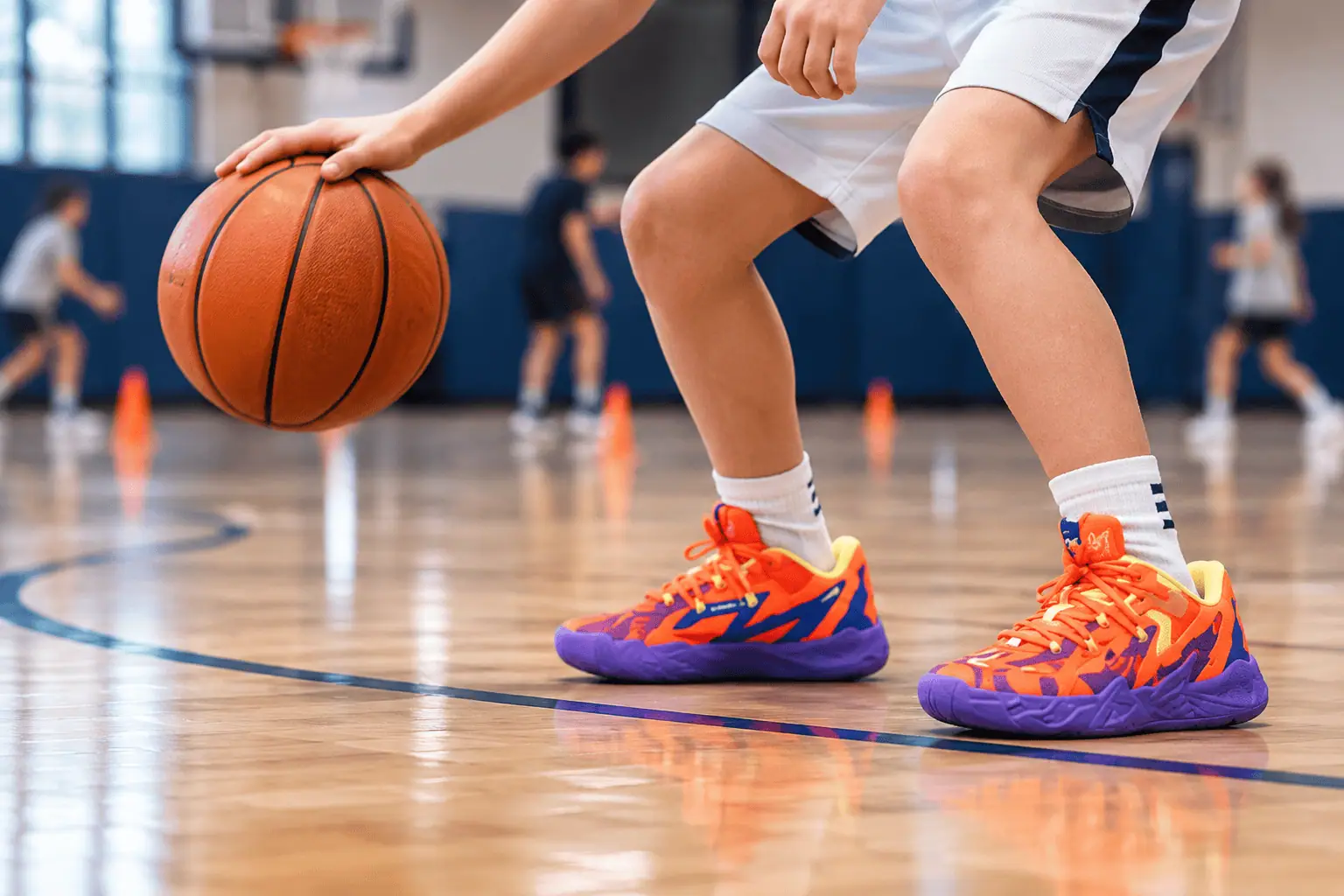
Finding the best basketball shoes for wide feet becomes a little more complicated. As a pair might look comfortable, offer excellent cushioning, and have all the features you want, but once you start moving around the court, the sides of your feet begin to feel squeezed. That can make running, jumping, and changing direction uncomfortable. The right fit can also make it easier to move confidently during the quick changes of direction and footwork used in basketball conditioning drills. Let’s look at what to consider before buying and some options worth checking out.
What Should You Look for in a Basketball Shoe for Wide Feet?
Not every shoe labelled comfortable will work for wider feet. Basketball involves plenty of lateral movement, sudden stops, and quick changes in direction. You need enough room for your feet to sit naturally, but the shoe should still hold them securely.
Here are a few things worth checking before making a purchase:
1. True Wide Width vs. Roomy Standard Fit
There is a difference between a shoe that comes in a dedicated wide width and one that simply has a roomier design.
For example, New Balance offers certain basketball shoes in 2E wide sizing. This means the shoe is manufactured with additional width compared to its standard version. It is worth considering if regular basketball shoes consistently feel tight around your forefoot.
Some standard-width shoes also have a naturally wider shape. These can work well if you have slightly wide feet, even if the manufacturer does not offer a separate wide option.
2. Forefoot and Toe-Box Room
Pay attention to the front of the shoe. The widest part of your foot should sit comfortably without pressing against the sides of the upper.
Your toes should also have enough room to spread naturally when you land after a jump or push off during a sprint. A pointed or narrow toe box can become uncomfortable, particularly during longer playing sessions.
3. Midfoot and Heel Lockdown
A wider shoe does not mean your entire foot should move around inside it. The heel and midfoot still need to feel secure when you make quick lateral movements.
If your heel keeps lifting or your foot slides towards the sides, the shoe may be too loose. Look for a design that provides enough forefoot room while keeping the rear portion comfortably fitted.
4. Cushioning and Stability
Think about how the shoe feels when you repeatedly jump, land, and stop. Some players prefer softer cushioning for comfort during longer games, while others like a firmer setup that gives them a closer connection to the court.
Players with flat feet may also want to pay attention to how supported and stable the shoe feels under the midfoot, rather than choosing a shoe based on cushioning alone.
The shoe should also feel stable when you move sideways or change direction. Cushioning preferences are personal, so it is worth trying different options instead of assuming that more cushioning automatically means a better basketball shoe.
Once You Find Your Pick, Check the Following
Choosing the right size is just as important as finding a shoe with enough width. Going half a size up might help with certain models, but it is not automatically the answer to a narrow fit. A longer shoe can create unnecessary movement around the heel without giving your foot the width it actually needs.
Before making your purchase, keep these checks in mind:
- Wear your usual basketball socks: Try the shoes with the same socks you normally wear during practice or matches.
- Check your toes: They should not feel pressed against each other or the front of the shoe.
- Pay attention to the forefoot: The widest part of your foot should not feel squeezed by the upper.
- Check the heel: Your heel should stay in place without excessive lifting when you walk.
- Try a few basketball movements: If possible, walk, stop suddenly, and make a few lateral movements before deciding.
- Look for pressure points: A shoe can feel snug without being comfortable. Pay attention to any pressure around your toes, sides, or midfoot.
Best Basketball Shoes for Wide Feet
Here are five basketball shoe options worth considering if you struggle with narrow fits. Some offer dedicated wide sizing, while others have a more accommodating standard shape.
| Basketball Shoe | Wide-Foot Fit | Best For | What Makes It Stand Out? |
|---|---|---|---|
| Reebok Angel Reese 1 | Exceptionally wide forefoot, measuring 98.3 mm in independent testing. | Players who need additional room around the ball of the foot. | Generous forefoot dimensions, SuperFloat cushioning and strong traction for physical play. |
| Nike LeBron Witness 9 | Above-average forefoot width and a roomy toe box compared to many basketball shoes. | Guards, wings and recreational players. | ReactX cushioning, supportive construction and a comfortable fit for regular court sessions. |
| adidas Dame 9 | Wider-than-average forefoot and toe-box measurements. | Guards and forwards who prefer a stable shoe. | Lightstrike cushioning, a broad platform and a comfortable amount of room across the front. |
| Jordan Luka 77 | Particularly generous toe-box width, measuring 73.3 mm around the big toe. | Players who need additional room around their toes, especially outdoor players. | Rounded toe-box design, durable outsole and responsive Air Zoom cushioning. |
| New Balance P400 | Dedicated 2E wide sizing alongside standard D sizing. | Players who need an officially manufactured wide-width basketball shoe. | Fresh Foam X cushioning, a responsive nylon plate and additional lateral support. |
-
Reebok Angel Reese 1
Fit: The Angel Reese 1 has one of the widest forefoot measurements recorded in independent basketball shoe testing. At 98.3 mm, it sits considerably above the 92.9 mm average. However, the toe box narrows towards the front, so players who need extra space around their little toes should pay attention to its shape.
Why Wide-Foot Players May Like It: If your main problem is pressure around the ball of your foot, the Angel Reese 1 is worth considering. Its wider forefoot gives you more room across that area without relying on a larger shoe size.
Performance: Reebok uses nitrogen-infused SuperFloat foam and its Energy Return System for cushioning. The shoe also recorded above-average shock absorption and strong traction in independent testing. Its supportive heel and upper help keep the foot secure during lateral movements.
Best For: Forwards, bigger players and anyone who prefers generous forefoot space with substantial cushioning.
-
Nike LeBron Witness 9
Fit: The LeBron Witness 9 has a standard-width construction, but its internal measurements are more accommodating than many basketball shoes. Independent testing recorded 95.8 mm of forefoot width and 71 mm of toe-box width, both above the tested averages.
Why Wide-Foot Players May Like It: The shoe offers additional room around the ball of the foot, while its relatively tall toe box gives your toes more vertical space. This combination makes it worth considering if you usually find Nike basketball shoes restrictive.
Performance: It features ReactX cushioning, a supportive construction and a herringbone-inspired outsole. The traction works well for quick stops and directional changes, while the cushioning provides a comfortable ride during regular basketball sessions.
Best For: Guards, wings and recreational players who want a more accommodating Nike shoe for indoor and outdoor basketball.
-
Adidas Dame 9
Fit: The Dame 9 has an above-average forefoot width of 95.4 mm and a toe-box width of 71 mm. Although Adidas does not offer it in dedicated 2E sizing, its standard fit provides more room than many other basketball models.
Why Wide-Foot Players May Like It: The additional space around the ball of the foot and toes makes it worth considering if standard basketball shoes usually feel tight. Its relatively broad base also gives you a stable platform during jumps and lateral movements.
Performance: The shoe uses Lightstrike cushioning and an internal plate for support. It offers a firm, stable ride, although its forefoot traction is more moderate than some competing models. The upper is also relatively stiff, so allow some time to get used to the fit.
Best For: Guards and forwards who prefer a stable basketball shoe with a roomier forefoot.
-
Jordan Luka 77
Fit: The Luka 77 has a particularly interesting fit profile. Its forefoot width measures 92.5 mm, which is around the average for basketball shoes. However, its toe-box width reaches 73.3 mm, making it one of the roomiest models tested in this area.
Why Wide-Foot Players May Like It: If your main problem is having your toes pressed together, the Luka 77 deserves a closer look. Its rounded toe-box shape provides additional horizontal space around the big toe, which can make a difference during longer playing sessions.
Performance: Designed with outdoor basketball in mind, the Luka 77 offers durable traction, good lateral support and a lightweight construction. It also includes an Air Zoom unit, although its cushioning is relatively firm compared to more heavily cushioned models.
Best For: Outdoor players and guards who need extra room around their toes and prefer a lightweight shoe with good court feel.
-
New Balance P400
Fit: Unlike the other options on this list, the P400 is available in dedicated 2E wide sizing alongside the standard D version. This makes it a particularly useful choice if you have consistently struggled to find basketball shoes that accommodate your foot width.
Why Wide-Foot Players May Like It: You can choose a wider version without increasing the shoe length. This gives you additional room across the foot while maintaining the fit and lockdown expected from a performance basketball shoe.
Performance: The P400 combines EVA foam with a Fresh Foam X core for cushioning. It also has a lightweight nylon plate for responsive transitions, along with a firmer foam inlay along the lateral midsole to provide additional stability.
Best For: Players with noticeably wide feet who want a dedicated wide-width basketball shoe for regular indoor play.
Common Mistakes When Buying Basketball Shoes for Wide Feet
A shoe can look perfect online and still turn out to be a poor choice once you start playing. Here are some common mistakes worth avoiding:
- Buying a longer shoe instead of finding enough width: Going up a full size can leave unnecessary space around your toes and heel without solving the actual width problem.
- Assuming every shoe from the same brand fits the same: Different models use different uppers, toe-box shapes, and internal dimensions.
- Choosing a roomy toe box but ignoring heel lockdown: Your toes may feel comfortable, but excessive heel movement can become distracting during quick changes of direction.
- Buying a shoe because a professional player wears it: A shoe that works for an NBA player might not suit your foot shape.
- Assuming wide-friendly means officially available in wide sizing: A roomy standard shoe and a dedicated 2E model are not the same thing.
- Wearing brand-new shoes for a tournament: Give yourself time to test the fit during practice before relying on a new pair in an important game.
Final Thoughts
The best basketball shoes for wide feet are not necessarily the most popular shoes or the ones with the biggest toe box. They are the ones that give your foot enough room without sacrificing the secure fit you need to move confidently on the court. Start with your actual width requirements, compare individual models, and take the time to try them before making a decision. Once you have the right footwear, consistent practice and skill development are just as important for improving your basketball game.
Give your child the opportunity to improve skills, confidence, and teamwork through basketball.
FAQs
-
How do I know if I have wide feet?
If standard basketball shoes squeeze the sides of your feet or leave your toes feeling
cramped, you may need a wider fit. Measuring your foot width can help confirm this. -
Are Nike basketball shoes good for wide feet?
Some models, such as the Nike LeBron Witness 9, offer more forefoot room than average. However, Nike has limited dedicated wide-width options.
-
Should I size up if my basketball shoes are too narrow?
Not always. Going half a size up may help with certain models, but it can also leave too much space around your heel. Look for a wider fit first.
-
Are wide basketball shoes available for kids?
Yes. New Balance offers wider footwear options for children, although dedicated wide-width basketball models can be harder to find.
-
How often should basketball shoes be replaced?
Replace them when the outsole loses traction, cushioning starts wearing out, or the shoes no longer provide adequate support