Talk to us

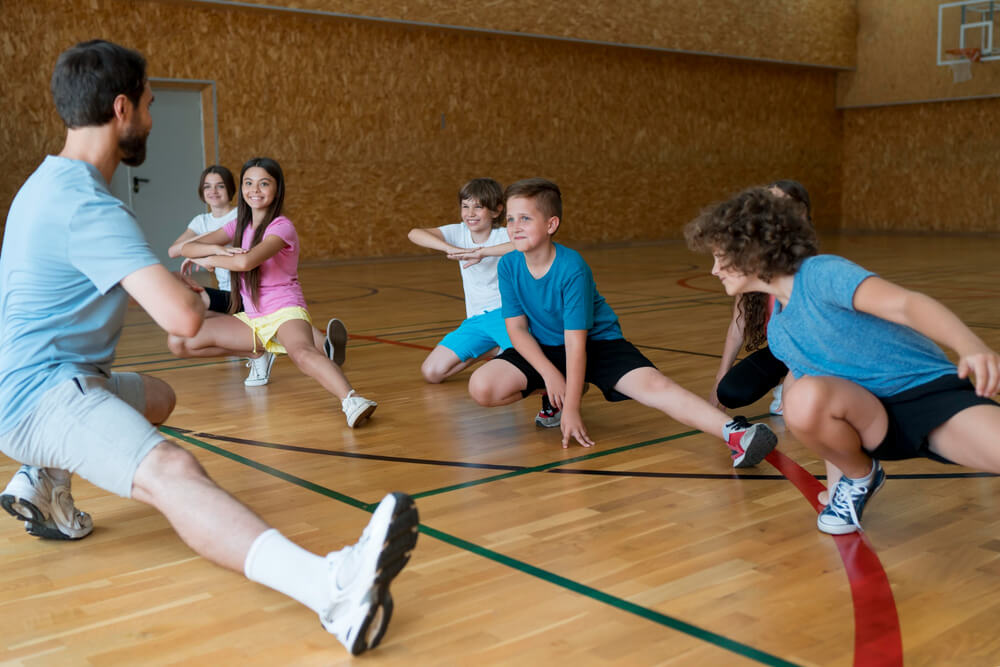
Speed simply means how fast a child can run in a straight line, and agility refers to how quickly they can change direction while staying controlled and balanced. Both skills are important in sports like soccer, basketball, and tennis. Through Speed & Agility Training for Kids, along with structured speed and agility drills for kids, young athletes can learn to move faster, react quicker, and stay balanced during games and training.
In this guide, we will explore age-appropriate speed and agility drills for kids between 5 and 18 that help them develop these skills safely while still having fun!
Age-Wise Speed Training Drills for Kids
Speed Drills for Ages 5-8:
At this age, the goal of the drills is not perfection in the technique but discovering how their bodies move.
-
Freeze Tag Sprints
This playful sprint drill teaches kids how to accelerate quickly and control their bodies when stopping. It combines speed, balance, and coordination through a fun challenge.
How to do it:
- Place two cones about 10 yards apart.
- On the signal to start, the child sprints to the second cone and freezes in an athletic stance with feet shoulder-width apart and knees slightly bent.
- Hold the position for two seconds before sprinting back. Complete 4-6 repetitions with full rest between each sprint.
-
Animal Runs
Animal-style movements turn fun agility drills for kids, as these are a creative way to build explosive power and coordination.
How to do it:
- Children sprint about 15 yards while imitating animals such as a bear crawl, frog jump, or gallop.
- Rotate through different animals each round. Perform 3-4 rounds for each movement pattern.
-
Red Light Green Light Sprints
This classic playground game naturally develops reaction speed and stopping control.
How to do it:
- Children line up about 20 yards from the coach or parent.
- When “Green” is called, they sprint forward. When “Red” is called, they must stop immediately in a balanced stance. Any child who cannot stop returns to the start.
- Play for 5-6 rounds.
-
Tail Tag
Chasing games are some of the most effective speed drills for kids because they naturally build quick first steps.
How to do it:
- Each child places a flag or pinnie in their waistband.
- In a 10-by-10 yard grid, children attempt to grab other players’ tails while protecting their own.
- Play for 45 seconds and repeat for 3-4 rounds.
-
Balloon Chase
This simple activity trains reaction speed and acceleration through play.
How to do it:
- A coach tosses a balloon into the air at random angles.
- Kids sprint to catch the balloon before it touches the ground.
- Perform around 5 to 6 rounds of 45 seconds with short rest breaks.
Speed Training Drills for Ages 9-12:
Children in this age group can begin learning proper sprint mechanics. The focus of these drills now shifts to controlled acceleration and efficient running form.
-
Acceleration Sprints (10-20-30)
This drill teaches young athletes how to gradually build speed across different distances.
How to do it:
- Place cones at 10, 20, and 30 yards.
- Start in a two-point stance and accelerate through each cone without slowing down.
- Perform 6-8 repetitions with about 60 seconds of rest.
-
Falling Starts
This drill uses gravity to teach proper sprint positioning without over-coaching technique.
How to do it:
- The athlete stands upright and slowly leans forward until balance is lost.
- At that moment, they explode into a 20-yard sprint.
- Complete 5–8 repetitions.
-
Stride Outs
Stride outs help athletes experience running at near-maximum speed while maintaining relaxed movement.
How to do it:
- Have the child jog for the first 10 yards and gradually open into a long stride for the next 30 yards.
- Tell them to focus on tall posture and smooth arm movement.
- Perform 5 to 6 repetitions of this.
-
Pogo Jumps
Pogo jumps are a simple plyometric drill that improves lower-leg strength and sprint rhythm.
How to do it:
- Stand with feet hip-width apart and jump rapidly in place using the ankles.
- Keep the knees slightly bent and remain on the balls of the feet.
- Perform 3 sets of 10 to 15 repetitions.
-
Skater Hops
This lateral power exercise strengthens balance and coordination.
How to do it:
- Jump side to side from one foot to the other while reaching the opposite hand toward the landing foot.
- Hold each landing for one second before the next jump.
- Perform 3 sets of 8-10 hops.
Advanced Speed Training Drills for Ages 13-18:
Teen athletes can begin more structured sprint training to develop power and top-end speed.
-
Resisted Sprints
Resistance training strengthens the muscles used for sprinting.
How to do it:
- A partner holds a resistance band around the athlete’s waist while they sprint 20 yards.
- After releasing the resistance, the athlete immediately sprints another 20 yards freely.
- Perform 4-6 repetitions.
-
Flying 20s
This drill isolates maximum sprint speed by allowing athletes to build momentum first.
How to do it:
- Jog 20 yards to gradually increase speed.
- Then sprint at full effort for the next 20 yards.
- Perform 5-8 repetitions with full rest.
-
Three-Point Start Sprints
Explosive starts are important in almost every sport.
How to do it:
- Start in a three-point stance with one hand on the ground.
- On a clap or whistle, explode forward and sprint for 20-30 yards.
- Perform 6-8 repetitions.
-
Wall Drives
This drill isolates sprint mechanics and helps athletes develop proper knee drive.
How to do it:
- Kids should place their hands against a wall at about a 45-degree angle.
- Tell them to drive one knee upward and switch legs quickly while keeping their hips tall.
- Perform 3 sets of 10 drives per leg.
-
Wicket Runs
Wicket runs help athletes develop proper stride length and rhythm.
How to do it:
- Place flat cones about 4-6 feet apart in a straight line.
- Sprint through the cones while landing one foot between each marker.
- Complete 4 to 6 repetitions.
Age-Wise Agility Training Drills for Kids
Agility Drills for Ages 5-8:
Young children develop agility best through playful movement and reaction games.
-
Cone Color Tag
This game improves reaction speed and listening skills.
How to do it:
- Place four colored cones in a small square.
- When the coach calls a color, children sprint to that cone and return to the center.
- Continue this drill for about 30 to 45 seconds.
-
Hopscotch Ladder
This drill improves coordination and spatial awareness.
How to do it:
- Create a ladder pattern on the ground using tape or ropes.
- Children hop through each space using two feet or one foot at a time.
- Repeat 3-4 times per pattern.
-
Mirror Drill
A partner drill like this helps develop reactive movement in young kids.
How to do it:
- Two children face each other three yards apart.
- One child leads by moving side to side while the other mirrors the movement.
- Switch leaders every 20 seconds or after every 4-5 movements.
-
Tail Tag
This is one of the most engaging and fun agility drills for young kids.
How to do it:
- Players chase each other while trying to grab flags tucked into their waistbands.
- Play 45-second rounds.
-
Obstacle Course Shuffle
Obstacle courses build coordination and creativity.
How to do it:
- Set up cones, hoops, and markers.
- Kids weave, hop, and shuffle through the course.
- Change the layout each round.
Agility Drills for Ages 9-12:
Older children can start learning structured footwork and multi-directional movement to improve their balance, coordination, and reaction speed.
-
T-Drill
Use this classic agility exercise to help kids learn how to change directions quickly while staying balanced and controlled.
How to do it:
- Place four cones in a T shape.
- One cone marks the starting point, one cone sits 10 yards ahead, and two cones sit 5 yards to the left and right of the top cone.
- The athlete starts at the base cone and sprints forward to the top cone.
- They then shuffle to the left cone, shuffle across to the right cone, shuffle back to the center cone, and finally backpedal to the start.
- Let them perform at least 4 to 6 repetitions with alternate starting directions.
-
L-Drill (3-Cone Drill)
This helps kids practice sharp turns and quick acceleration after changing direction to improve agility and body control.
How to do it:
- Place three cones in an L shape with about five yards between each cone.
- The athlete starts at the first cone and sprints to the second cone before returning to the starting point.
- Next, the athlete sprints again to the second cone, loops around it, runs around the third cone, and weaves back through the cones before finishing at the start.
- Perform 5-6 repetitions with about 60 seconds of rest between runs.
-
Box Drill
It develops agility in multiple directions by combining several movement patterns into one continuous drill.
How to do it:
- Place four cones in a square about five yards apart.
- The athlete begins at one cone and sprints to the next cone.
- They then shuffle sideways to the third cone, backpedal to the fourth cone, and perform a carioca or crossover run back to the starting cone.
- Complete about 4-6 repetitions and switch directions after each round.
-
Dot Drill
This drill improves a child’s coordination, balance, and quick foot movements.
How to do it:
- Create five small dots on the ground arranged in an X pattern, similar to the number five on a dice.
- The athlete then has to jump from dot to dot using both feet while following different movement patterns.
- They can jump forward, backward, or side to side while maintaining balance.
- Perform 3 to 4 different patterns in each training session.
-
Ladder In-In-Out-Out
This ladder drill improves foot speed, rhythm, and coordination.
How to do it:
- Place an agility ladder on the ground.
- The athlete steps both feet into the first box one at a time (in-in), then steps both feet outside the ladder on each side (out-out).
- Continue this pattern down the ladder while maintaining quick but controlled movements.
- Perform 4 to 6 passes through the ladder.
Advanced Agility Drills for Ages 13-18:
Teen athletes benefit from higher-intensity agility drills that combine speed, strength, and reaction to improve their sports performance.
-
5-10-5 Shuttle (Pro Agility)
This drill trains explosive change-of-direction ability, acceleration, and deceleration.
How to do it:
- Place three cones in a straight line, each five yards apart. The athlete starts at the center cone.
- On the signal to start, the athlete sprints five yards to the right cone and touches the line.
- They then sprint ten yards to the opposite cone and touch it before sprinting five yards back through the center.
- Perform 6-8 repetitions with about 60 seconds of rest between each run.
-
Reactive Cone Drill
This drill improves reaction speed to train athletes to respond to unpredictable cues rather than follow a memorized pattern.
How to do it:
- Place four cones around the athlete at a distance of about three to five yards as they begin the drill, standing in the center.
- The coach points to a cone randomly, and the athlete immediately sprints to touch it before returning to the center.
- Continue for 30-45 seconds and complete 3-4 rounds.
-
Resisted Lateral Shuffles
This agility drill for kids focuses on strengthening their hips and legs while improving lateral movement.
How to do it:
- Attach a resistance band to the athlete’s waist while a partner holds the other end.
- The athlete shuffles sideways for five yards against the resistance.
- After reaching the cone, release the band and shuffle freely back to the start.
- Perform 4-6 repetitions in each direction.
-
Illinois Agility Drill
This drill combines sprinting, turning, and weaving movements and is commonly used to measure agility performance in many sports.
How to do it:
- Set up a rectangle measuring about 10 yards by 5 yards.
- Place four cones down the center line.
- The athlete sprints forward, weaves through the center cones, and finishes with a sprint back to the starting line.
- Perform 4 to 6 repetitions with full rest between runs.
-
5-Cone Star Drill
This drill develops agility in multiple directions while improving reaction time and body control.
How to do it:
- Place five cones around a center point in a star pattern, each about five yards away. The athlete begins standing at the center.
- A coach calls out a cone, and the athlete sprints to touch it before returning to the center.
- The coach calls the next cone immediately after the athlete returns.
- Complete 4-6 rounds of 30 seconds with full rest between rounds.
How Valley Athletics Helps Kids Improve Speed & Agility?
At Valley Athletics, young athletes train in a supportive environment designed to develop both skills and confidence.
Coaches guide them through structured and age-appropriate speed and agility drills for kids that build coordination, balance, and athletic performance. Our programs focus on proper movement mechanics, injury prevention, and fun training experiences.
With professional coaching, we help them become stronger and more confident athletes.
Looking for a community that pushes your athlete to be their best? You’ll find it here.
Frequently Asked Questions
-
At what age should kids start speed and agility drills?
Most children can begin basic speed and agility drills around the age of five through simple games and playful activities.
-
How often should kids train speed and agility?
Two to three sessions per week are usually enough for kids to develop speed and coordination safely.
-
Are speed drills safe for young children?
Yes. Age-appropriate speed drills for kids that focus on play and short distances are safe and effective.
-
What is the difference between speed and agility training?
Speed training focuses on running fast in a straight line, while agility training focuses on changing direction quickly.
-
Can agility drills prevent sports injuries?
Yes. Many agility drills can help kids improve their balance and body control. This helps in reducing the risk of injuries in young athletes.
-
How long should a speed and agility session be?
Most sessions should last about 30 to 45 minutes, depending on the child’s age.
-
Do kids need equipment for agility drills?
Many fun agility drills for kids require only cones, markers, or a simple space to run.