Talk to us

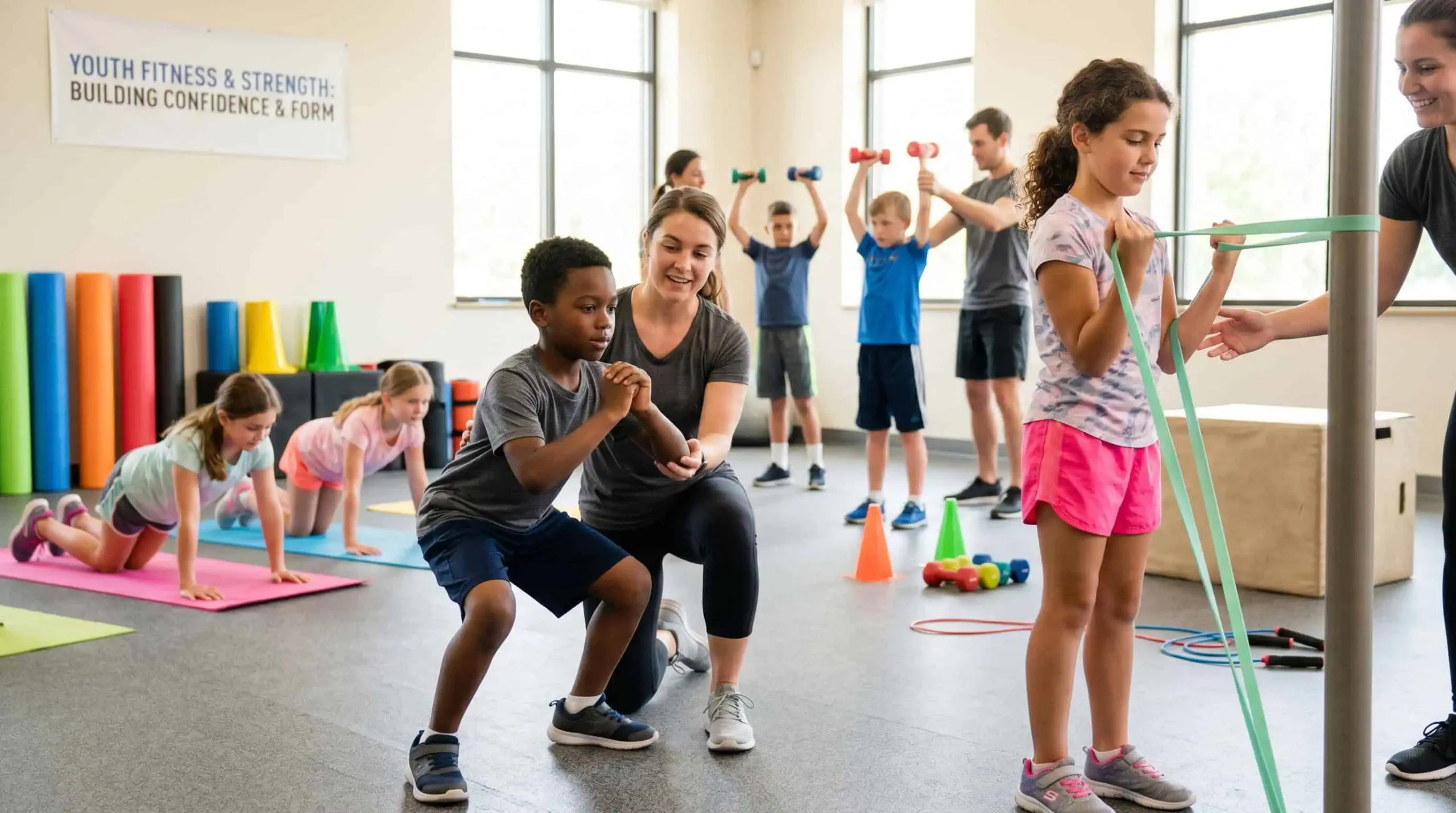
Strength training for kids focuses on building strength, coordination, and body control using safe, age-appropriate exercises. It helps them move better, feel stronger, and perform well in sports without putting unnecessary stress on their bodies.
What Is Strength Training for Kids?
Strength training for kids refers to structured physical activities that improve muscle strength, balance, and coordination using safe and controlled movements. With this, kids build a strong foundation that supports their overall fitness, sports performance, and injury prevention.
The exercises included in strength training are: bodyweight drills, resistance bands, and light weights. But how many reps a child should do and how much weight they should lift depends on their age and ability.
Many parents confuse strength training with weightlifting or bodybuilding, but they are not the same.
- Strength training for kids uses bodyweight, light resistance, and controlled movements.
- Weightlifting focuses on heavy loads and muscle size.
The goal here is not bulk, but to build better movement, strength, and confidence.
What Are the Key Benefits of Strength Training for Kids?
Strength training helps kids build stronger bones, reduce injury risks, increase muscular strength, and boost their self-esteem.
1. Improves Strength & Overall Fitness
Strength training improves muscle strength and endurance in kids. This helps them perform everyday activities with ease and supports better athletic performance across sports.
2. Enhances Coordination & Balance
Strength training improves how muscles and the nervous system work together. This leads to better coordination, balance, and control, which are essential for sports and physical activities.
3. Reduces Risk of Injuries
Proper strength and agility training for kids strengthens their muscles, joints, and ligaments. When they have strong muscles and joints, their stability improves and so does their movement efficiency. This reduces their risk of sport-related injuries.
4. Builds Confidence & Mental Strength
When kids get physically stronger, they get better at sports. And when this happens, their confidence grows naturally. Apart from this, they also learn discipline, focus, and consistency, which are beneficial beyond sports.
Is Strength Training Safe for Kids?
Yes, strength training for kids is safe when done correctly and under proper guidance.
According to Mayo Clinic, properly supervised strength training is safe for children and does not affect their growth. The key is to avoid focusing on heavy lifting and instead prioritize proper form, light resistance, and structured guidance.
What Is the Right Age to Start Strength Training for Kids?
Children can begin strength training around the age of 7-8, as long as they can follow instructions and maintain proper form.
| Age Group | Training Type | Focus Exercises | Resistance | Key Notes |
|---|---|---|---|---|
| 5-7 Years | Movement-based | Running, jumping, and balance | No weights | Focus on fun and motor skills |
| 7-10 Years | Beginner strength | Squats, push-ups, planks | Bodyweight, bands | Learn technique and control |
| 10-13 Years | Basic strength | Controlled movements | Light weights | Improve coordination |
| 13-16 Years | Progressive training | Full-body workouts | Moderate weights | Focus on gradual progression |
| 16+ Years | Advanced training | Sport-specific training | Increased resistance | Structured programs |
-
Ages 5-7: Focus on Movement
At this stage, kids benefit from activities that improve balance and coordination. Structured workouts are not required, and play-based movement is most effective.
-
Ages 7-10: Learning the Basics
This is the right time to introduce basic strength training to kids in a simple and structured way. The focus is on proper technique and controlled movement, like balancing, squatting, and pushing.
-
Ages 10-13: Building Strength Through Coordination
Strength gains come from better muscle coordination rather than muscle size. So, at this stage, kids focus on improving consistency and control.
-
Ages 13-16: Gradual Progression
Teenagers can start progressive training with moderate resistance. But the focus should remain on technique rather than lifting heavy weights.
-
Ages 16+: Advanced Training
Older teens can follow structured programs that include sport-specific strength and agility training with proper supervision.
Important Rules for Strength Training for Kids: How to Ensure Safety
-
Focus on Proper Form
There’s nothing more important than following the correct technique. Poor form increases the risk of injury and reduces the effectiveness of training.
-
Ensure Professional Supervision
Qualified coaches or trainers should guide workouts. Proper supervision ensures safety and helps kids learn the right techniques.
-
Start with Light Resistance
Begin with bodyweight or light resistance bands. Gradually increase intensity only when the child shows good control and form.
-
Train the Whole Body
A balanced routine should target all major muscle groups. This prevents muscle imbalances and improves overall performance.
-
Include Rest & Recovery
Kids should rest for at least one day between sessions. Training approximately 2 to 3 times per week is enough for steady progress.
-
Keep It Consistent & Fun
Consistency matters more than intensity. Making strength training enjoyable for kids helps them stay motivated and engaged.
How Valley Athletics Helps Kids Build Strength Safely
At Valley Athletics, we focus on structured strength training for kids that is safe, engaging, and results-driven. Our programs combine movement training, strength development, and skill-building to help kids grow into confident athletes.
With expert coaching and age-appropriate training, we ensure every child improves their strength, coordination, and overall fitness in a supportive environment.
Build speed, agility, & confidence at Valley Athletics.
FAQs:
-
At what age can kids start strength training?
Most children can start strength training at around age 7-8, as long as they can follow instructions correctly and maintain proper form during exercises.
-
What are the best strength training exercises for kids?
The best strength training for kids includes bodyweight exercises like squats, push-ups, lunges, and planks. These movements build strength, coordination, and control without putting stress on the body.
-
Can strength training hinder growth?
No, this is a common myth. Proper strength training for kids does not stunt growth. In fact, it supports healthy bone development and overall physical growth when done correctly.
-
How often should kids do strength training?
Strength training for 2 to 3 days per week is enough for kids. They also need enough rest days in between for proper muscle recovery.
-
Do kids need heavy weights for strength training?
No, kids do not need heavy weights. Strength training exercises can be done using bodyweight, resistance bands, or light weights, depending on their age and ability.