Talk to us

Volleyball is a team sport where every player has a specific role on the court. Whether you’re a beginner learning the game, a parent trying to understand your child’s position, or a player looking to find the best fit for your skills, understanding volleyball positions is one of the first steps to becoming a smarter athlete.
Indoor volleyball features six primary positions, each with unique responsibilities on offense and defense. Some players focus on scoring points, while others specialize in setting up attacks, defending the court, or controlling the tempo of the game.
In this guide, we’ll explain all volleyball positions, where each player stands, what they do during a match, and how to determine which position may be the best fit for your strengths.
Volleyball Positions at a Glance
| Position | Main Responsibilities | Difficulty Level | Best For |
|---|---|---|---|
| Setter | Runs the offense, delivers the second contact, controls team tempo, and decides which hitter gets the ball. | High | Quick thinkers, leaders, strong communicators |
| Outside Hitter (Left Side) | Primary attacker and serve-receive passer who attacks from the left side while contributing on defense. | High | Athletic, all-around players |
| Opposite Hitter (Right Side) | Attacks from the right side, blocks opposing outside hitters, and often serves as a backup setter. | High | Versatile, complete athletes |
| Middle Blocker | Leads net defense, blocks quick attacks, and runs fast-tempo offensive plays near the setter. | Medium-High | Tall, explosive athletes |
| Libero | Defensive specialist responsible for passing, serve receive, and digging. Cannot block or attack above net height. | Medium | Quick, agile defenders |
| Defensive Specialist | Provides back-row defense and passing support using standard substitution rules and strengthens serve receive. | Medium | Defense-focused players |
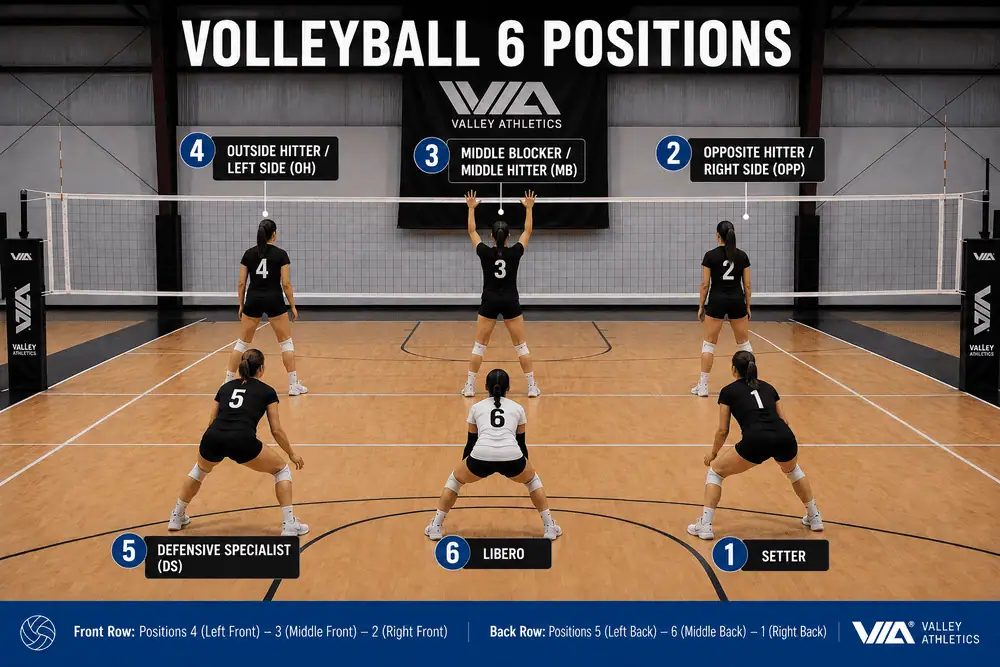
Key Volleyball Positions & What Each Player Does
To understand the key positions in volleyball, it’s important to look at how each role contributes on the court. Every position has a specific job, from setting up plays to attacking, blocking, or defending. Together, these create a balanced team that can score points, control rallies, and respond quickly during matches.
1. Setter (S)
The setter is the team’s on-court quarterback, similar to a quarterback in football. They take the second contact on nearly every play and decide which hitter gets the ball, when, and where: a decision made in a split second under pressure.
Where they play: Setters rotate through all six court positions but typically run the offense from the front or back right, depending on the rotation system the team runs (4-2, 6-2, or 5-1).
Key Responsibilities:
- Taking the second contact and delivering a hittable ball to attackers
- Reading the opposing block and choosing the best attack option
- Directing tempo: fast “quick” sets vs. higher, slower sets
- Leading communication and organizing the offense in real time
- Outside Hitter (Left Side): The Primary Attacker
Best suited for players who: are calm under pressure, have strong hands and quick decision-making, and enjoy directing others rather than always finishing the play themselves.
2. Opposite Hitter / Right Side (OPP)
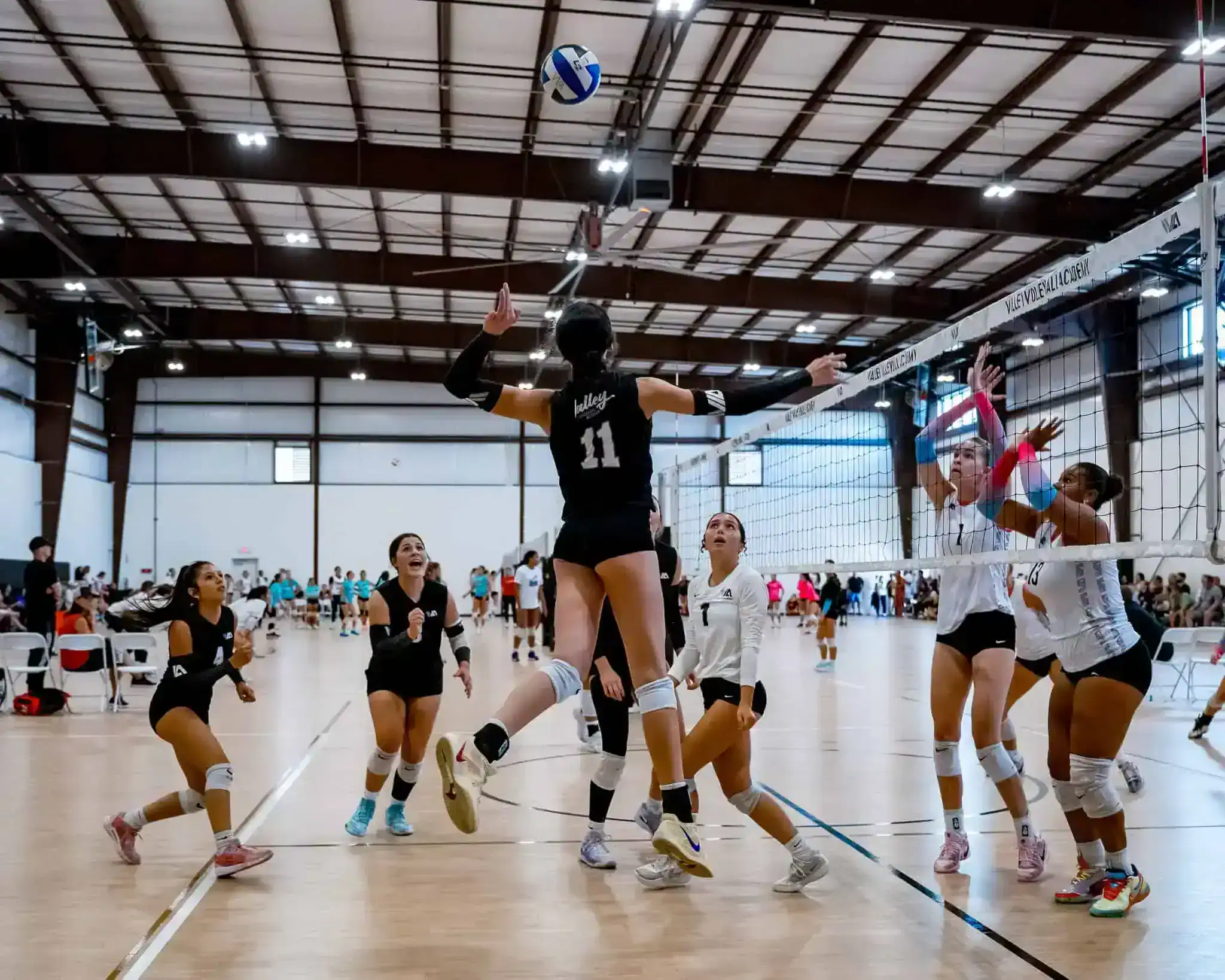
The opposite hitter mirrors the outside hitter from the right side. Their biggest defensive job is blocking the other team’s outside hitter (often their most dangerous attacker), which is why many opposites are tall, strong blockers. This position also favors left-handed players, since a lefty’s swing lines up more naturally with sets from the right side.
Where they play: Front and back right, directly across the net from the setter’s usual rotation slot.
Key Responsibilities:
- Attacking high balls and off-speed sets from the right side
- Blocking the opponent’s primary outside hitter
- Serving as a secondary setter if the setter can’t reach the ball
- Balancing the offense so it doesn’t rely entirely on the left side
Best suited for players who: want to be involved in every phase of the game and can handle a high volume of both attacking and passing.
3. Middle Blocker / Middle Hitter (MB)
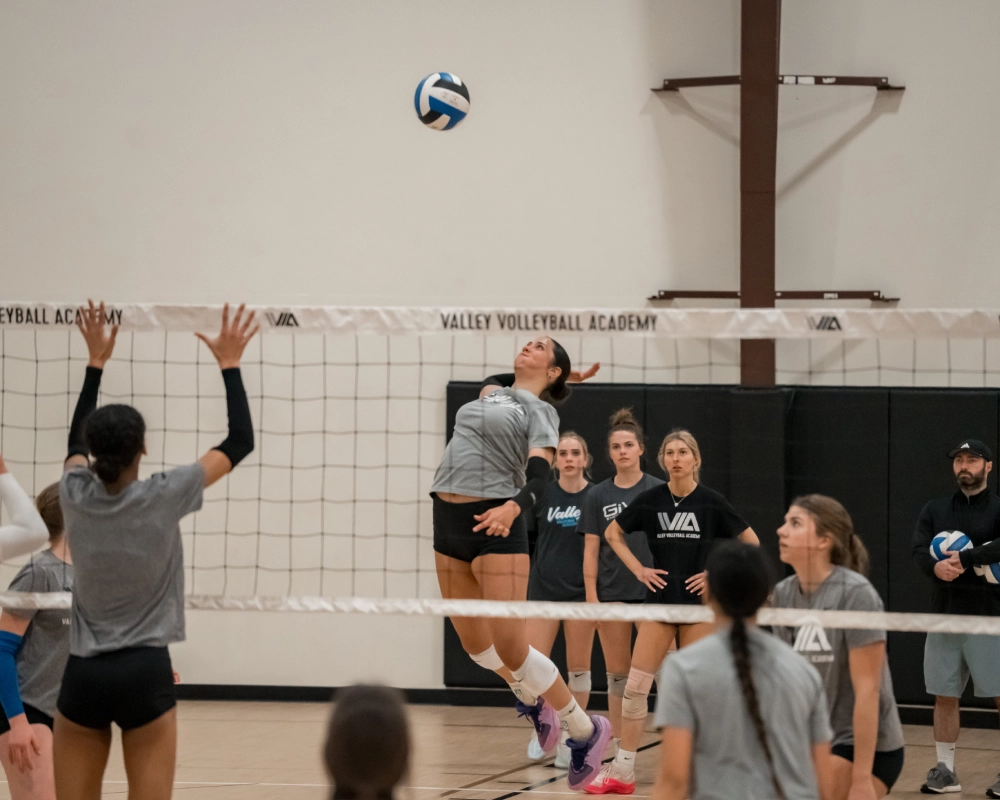
Middle blockers are usually the tallest players on the team, and for good reason: their main job is shutting down the center of the net. They also run fast “quick” attacks designed to catch the block off guard before it can set up.
Where they play: Front row only, in the center of the net. Middles are almost always subbed out for a libero or DS when they rotate to the back row.
Key Responsibilities:
- Blocking the center of the net against quick and combination attacks
- Reading the setter to anticipate where the ball is going
- Running fast-tempo attacks in the middle
- Moving quickly along the net to help close blocks on the left and right
Best suited for players who: are tall and quick off the ground, with strong timing and net awareness. Height alone isn’t enough.
4. Outside Hitter / Left Side (OH)
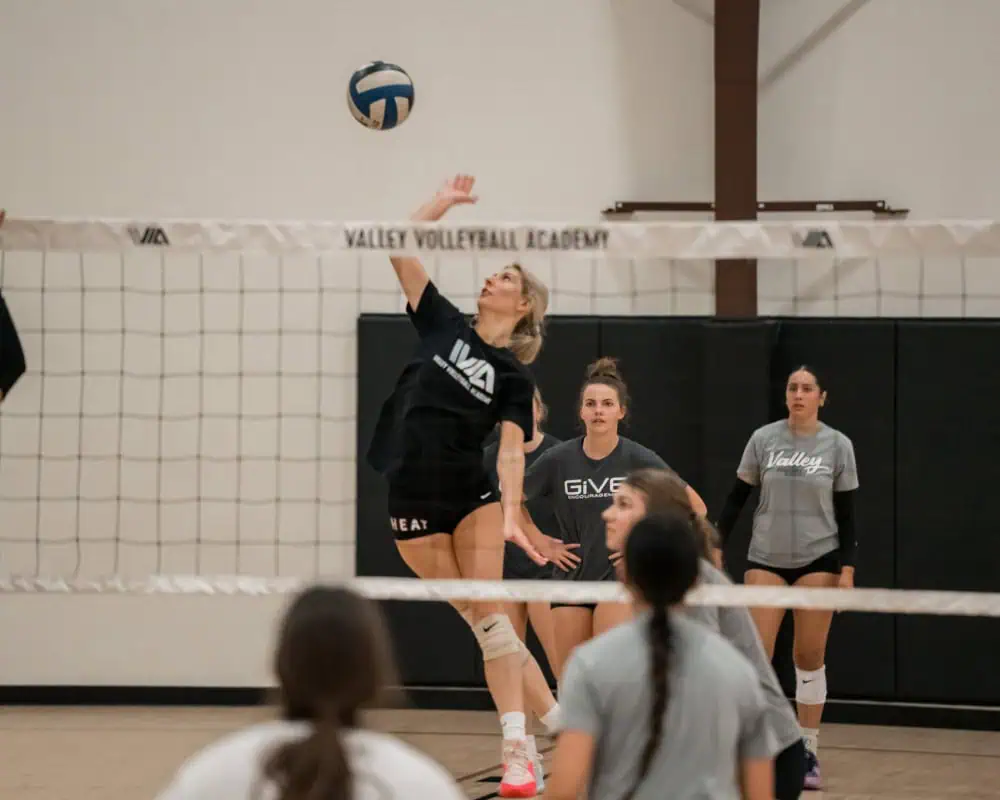
The outside hitter is usually the most active player on the court, touching the ball on offense, defense, and serve receive. On most teams, the OH receives the highest volume of sets (often 50–60% or more) because they’re trusted to score even when the pass isn’t perfect.
Where they play: Attacks from the left front, and rotates through the back row for serve receive and defense.
Key Responsibilities:
- Leading the team in kills and attack attempts
- Passing serves as part of the serve-receive line
- Playing back-row defense when rotated out of the front row
- Attacking out of imperfect sets, since tough passes are usually routed here
Best suited for players who: want to be involved in every phase of the game and can handle a high volume of both attacking and passing.
5. Defensive Specialist (DS)
A defensive specialist plays a similar role to the libero, passing and defending in the back row, but without the libero’s special substitution privileges. A DS enters the game through a standard substitution, which counts against the team’s sub limit for that set.
Where they play: Back row only, subbing in for a player who needs defensive support.
Key Responsibilities:
- Strengthening back-row defense and serve receive
- Replacing a weaker passer or defender for one rotation
- Supporting the libero, especially on teams that rotate two defensive specialists
Best suited for players who: are strong defenders and passers but haven’t been designated the team’s libero, or who split defensive duties with the libero.
6. Libero (L)
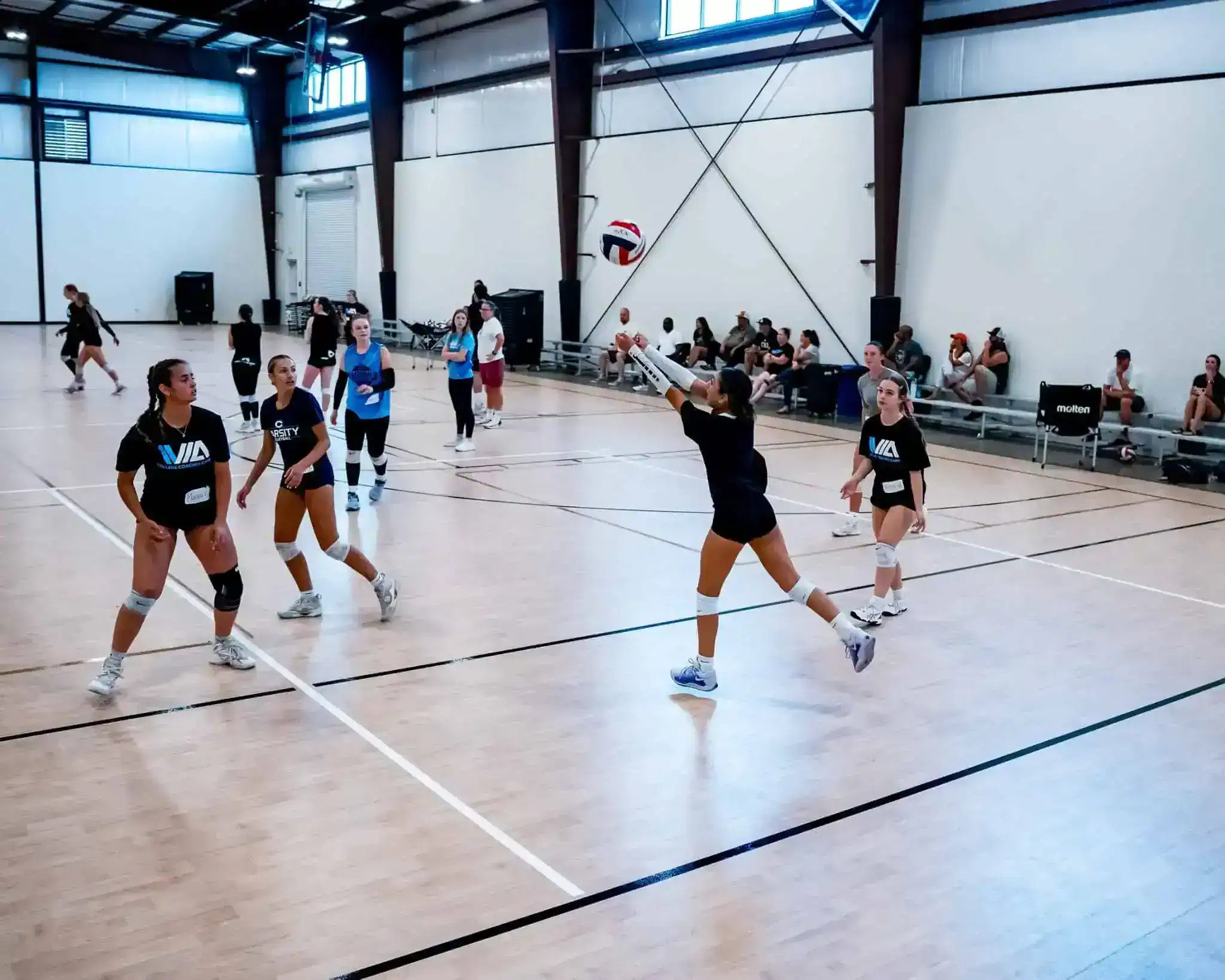
The libero is instantly recognizable: a different colored jersey and a role built entirely around defense. Libero’s specializes in serve receive, passing and digging attacks to help keep rallies alive. For a closer look at the position’s responsibilities, restrictions and essential skills, read our guide to the libero volleyball role and rules.
Where they play: Back row only. By rule, a libero cannot attack the ball above net height from anywhere on the court, and serving is often restricted depending on the level and league.
Key Responsibilities:
- Passing serve receive with high consistency
- Digging hard-driven attacks
- Directing back-row defense and communication
- Stepping in as an emergency setter if the primary setter digs the ball
Best suited for players who: are quick, fearless about diving for the ball, and want a role built entirely around ball control rather than attacking.
Why Do Players Need to Understand Volleyball Positions?
When players understand volleyball positions, they stop playing as individuals and start working as a coordinated team. When each player knows their role, it leads to better structure, faster decisions, and more consistent performance.
- Clear Roles Reduce Mistakes on the Court – Players who are aware of their roles reduce confusion, missed balls, and overlapping movements. This helps the team stay organized during fast-paced rallies.
- Faster Decision-Making During Plays – Understanding what positions are in volleyball allows players to react quickly. Setters know where hitters will be, and defenders can anticipate where the ball is likely to go.
- Stronger Offensive & Defensive Systems – Each position plays a role in team strategy. Hitters focus on scoring, middle blockers protect the net, and defensive players control the back row. Knowing all the key positions helps players improve their weaknesses and improve both offense and defense.
- Better Communication & Game Awareness – Players who understand positions communicate more effectively and anticipate plays better. Teams begin to read each other’s movements, improving coordination and overall flow.
- Faster Development for Young Players – For beginners, learning all volleyball positions early builds confidence and helps them develop the right skills for their role. This leads to faster improvement and better long-term performance.
Ready to Improve Your Volleyball Skills?
At Valley Athletics, we help athletes understand the game beyond just playing. We focus on developing skills, teamwork, and game awareness.
Explore Volleyball Programs at Valley Athletics:
- Youth Volleyball Programs: Age-appropriate training focused on fundamentals and teamwork.
- Clinics & Skill Development Sessions: Targeted sessions to improve serving, passing, setting, and hitting.
- Camps & Seasonal Training: Structured programs for consistent growth and game experience.
- Private Lessons & Small Group Training: Personalized coaching for faster improvement.
Improve your volleyball skills with expert coaching, better game awareness, and structured training programs.
FAQs
1. What are the positions in volleyball?
The six positions are setter, outside hitter, opposite hitter, middle blocker, libero, and defensive specialist.
2. What is the difference between a libero and a defensive specialist?
Both play defense in the back row, but the libero has unlimited substitutions that don’t count against the team’s sub total and can’t attack above net height, while a defensive specialist uses standard substitutions and has fewer restrictions.
3. What position should my child play?
Most coaches start beginners in ball-control-focused roles, passing and defense, since those skills transfer to every position later. Height, speed, and confidence typically shape the final fit as players develop.
4. What is the most important position in volleyball?
Every position is important, but the setter is often considered key because they control the offense. They decide which player receives the ball and help organize plays, which directly impacts how effectively the team can score points.
5. How tall is a typical middle blocker?
Middle blockers tend to be the tallest players on a roster since blocking the center of the net is their primary job, though timing and footwork matter as much as height.
6. What position scores the most in volleyball?
The outside hitter usually scores the most points because they receive the most attack opportunities, including imperfect passes other hitters can’t convert as easily.
7. Can a libero become a setter?
A libero can set the ball if it’s their team’s second contact, but by rule they cannot attack it above net height, and there are restrictions on overhead sets from within the attack zone. Check current league rules.
8. What is a serve in volleyball?
A serve is the action that starts every rally in volleyball. A player hits the ball from behind the end line and sends it over the net into the opponent’s court.
9. How do you score points in volleyball?
A team scores a point when the opponent fails to return the ball properly, commits a fault, or sends the ball out of bounds. Points can be won on both serve and defense, which is known as rally scoring and is used in most modern matches.