Talk to us

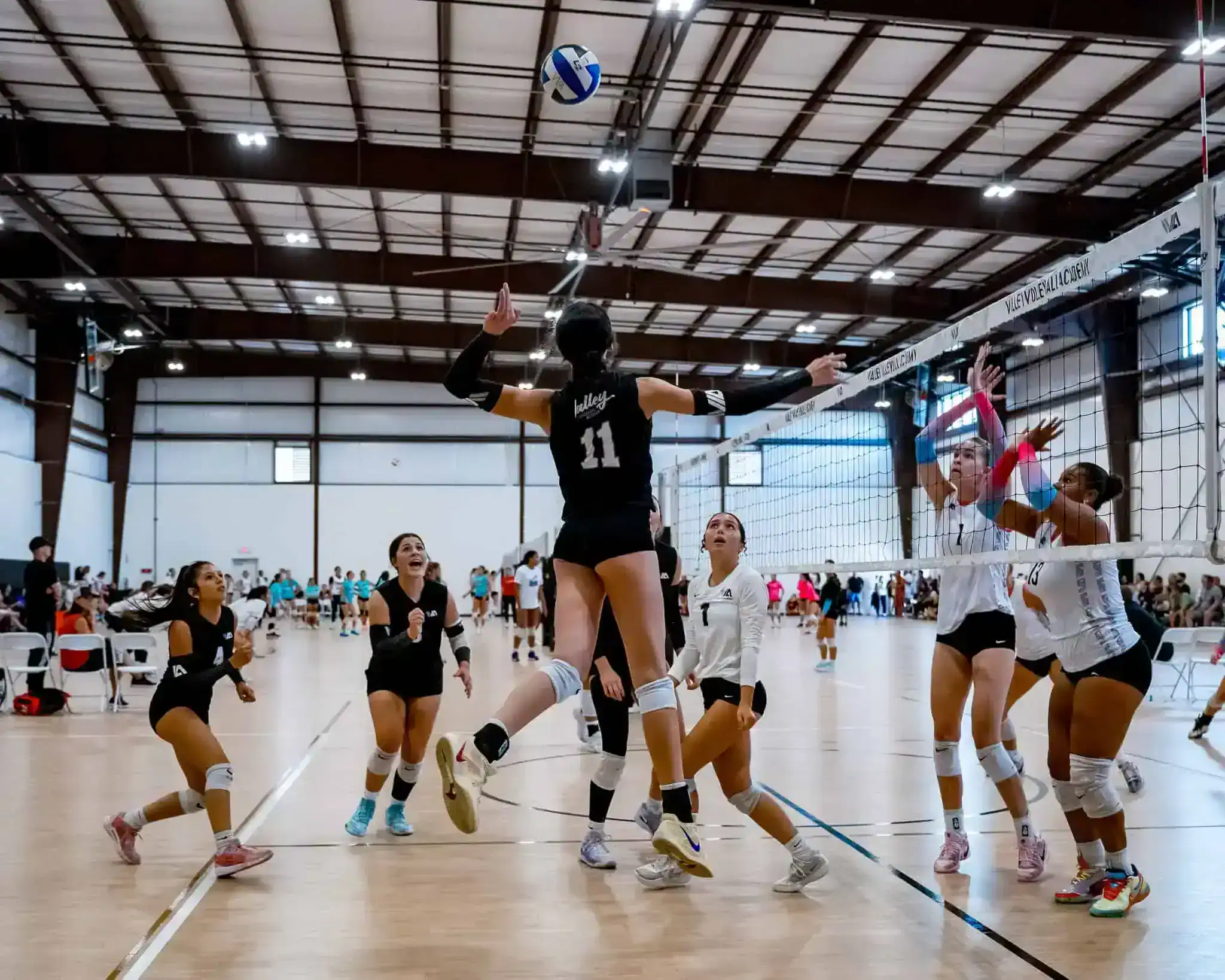
Strong footwork is what allows volleyball players to get to the ball on time and stay in control during every play. Practicing different volleyball drills, especially volleyball footwork drills daily helps improve speed, balance, and reaction, which are essential for passing, setting, hitting, and defense.
In this guide, you’ll learn simple and effective beginner-friendly and advanced footwork drills that volleyball players can use to move better on the court.
What Is Footwork in Volleyball?
Footwork in volleyball refers to the systematic and rhythmic movements of a player. It’s how you move across the court to position yourself for the ball. It includes steps, movement patterns, and body control that help players stay balanced while reacting quickly.
Maintaining good footwork allows players to reach the ball faster, maintain control, and execute skills with better accuracy.
Why Does Good Footwork in Volleyball Matter?
Good footwork means faster movement, better body control, improved court awareness, and stronger defense.
- Faster Movement on the Court: Strong footwork helps players reach the ball quickly, which improves reaction time during fast-paced rallies.
- Better Balance & Power: Proper foot positioning allows you to stay balanced and generate more power when passing, hitting, or jumping.
- Improved Court Awareness: Maintaining your footwork helps you stay in the right position, making it easier to read the game and react effectively.
- Stronger Defensive Reactions: Quick and controlled movement allows players to adjust to unexpected plays and defend more effectively.
- Consistent Performance: When you work on your footwork, you focus on moving correctly. This improves your skills and makes you more consistent with your game.
What Are the Key Principles of Effective Volleyball Footwork?
Great movement on the court is all about speed, control, balance, and positioning. Below are the core principles to help you perform better on the court:
- Stay Low: Keeping your knees bent and your center of gravity low keeps you balanced and ready to move in any direction. A lower stance allows quicker reactions and better control during fast plays.
- Move Before Contact: Strong footwork in volleyball means getting into position early. This first move allows you to make clean and controlled contact.
- Use Short, Quick Steps: Quick, controlled steps help you adjust more quickly on the court. Avoid taking large or unnecessary steps, as they can slow you down and affect balance.
- Maintain a Balanced Stance: Keeping your weight slightly forward on the balls of your feet allows you to react quickly. A balanced stance improves stability during passing, hitting, and defensive movements.
- Recover Quickly After Each Move: After every action, players should return to a ready position immediately. Quick recovery helps maintain positioning and prepares you for the next play.
- Practice with Consistency: Improvement in your game comes from regular practice. Repeating proper movement patterns builds muscle memory and helps you perform consistently during matches.
Essential Volleyball Footwork Drills
Having solid footwork doesn’t just make you stronger, it also helps you with your balance and controls the speed at which you hit the ball. Below are some of the most essential footwork drills to practice and improve your performance.
Volleyball Footwork Drills for Beginners
Just starting out in the court? Don’t worry, these footwork drills are designed to build balance, coordination, and movement control.
1. Approach Step Drill
Purpose: Improves timing, coordination, and jumping mechanics for attacking.
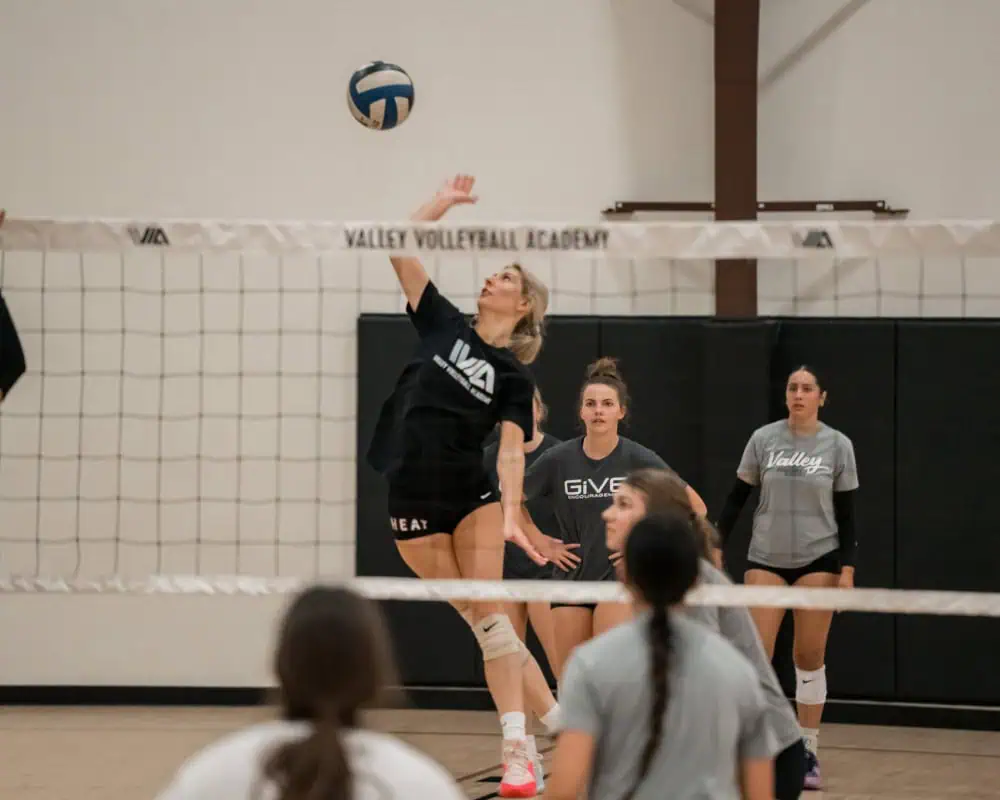
How it works: Players practice a three-step approach without the ball to focus on their rhythm and balance. Right-handed players step left, then right, followed by a quick closing step before jumping. Repetition helps build consistent movement patterns.
2. Lateral Shuffle Drill
Purpose: Enhances side-to-side movement for passing and defense.
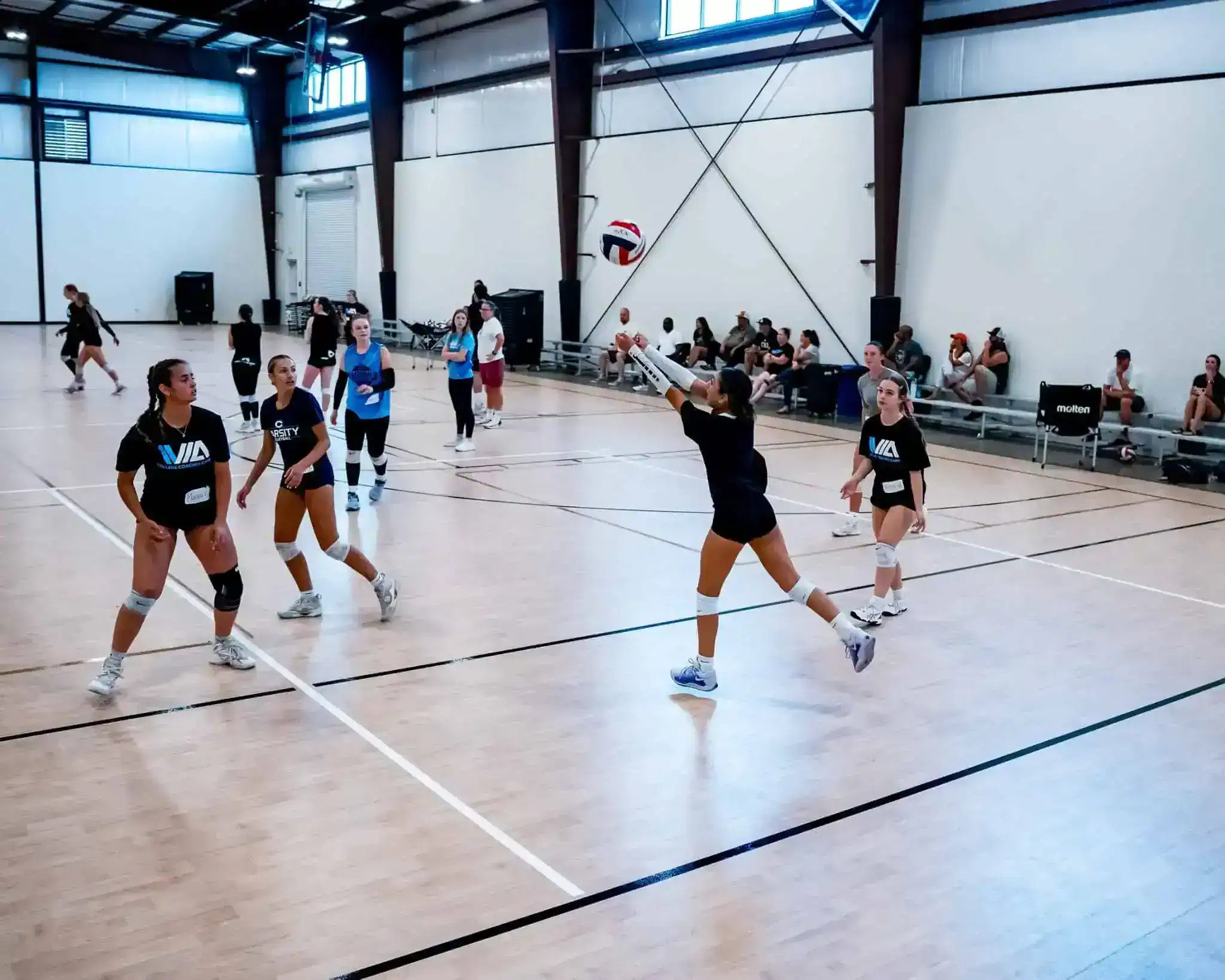
How it works: Players start in a low stance and shuffle sideways without crossing their feet. They keep their shoulders square to the net while maintaining balance and control throughout the movement.
3. Crossover Step Drill
Purpose: Helps players cover more court distance quickly.
How it works: Players move laterally by crossing one foot over the other in a running motion. This drill is useful for defensive recovery and moving quickly toward wide balls.
4. Forward & Backward Movement Drill
Purpose: Builds quick transitions between forward and backward movement.
How it works: Players start in a defensive stance, move forward quickly for a few steps, and then immediately move backward to their starting position. This drill simulates reacting to short and deep balls.
5. Stair Jumping
Purpose: Develops lower-body strength and vertical jumping ability.
How it works: Players jump up a set of stairs or platforms with controlled landings. This drill improves explosive power and prepares athletes for repeated jumping during games.
Advanced Volleyball Footwork Drills
You can use these volleyball footwork drills in competitive training to focus on your speed, reaction, and game-like transitions. These will help you perform under pressure and move efficiently in real match situations.
1. Block to Approach Transition Drill
Purpose: Improves transition speed from defense to offense.
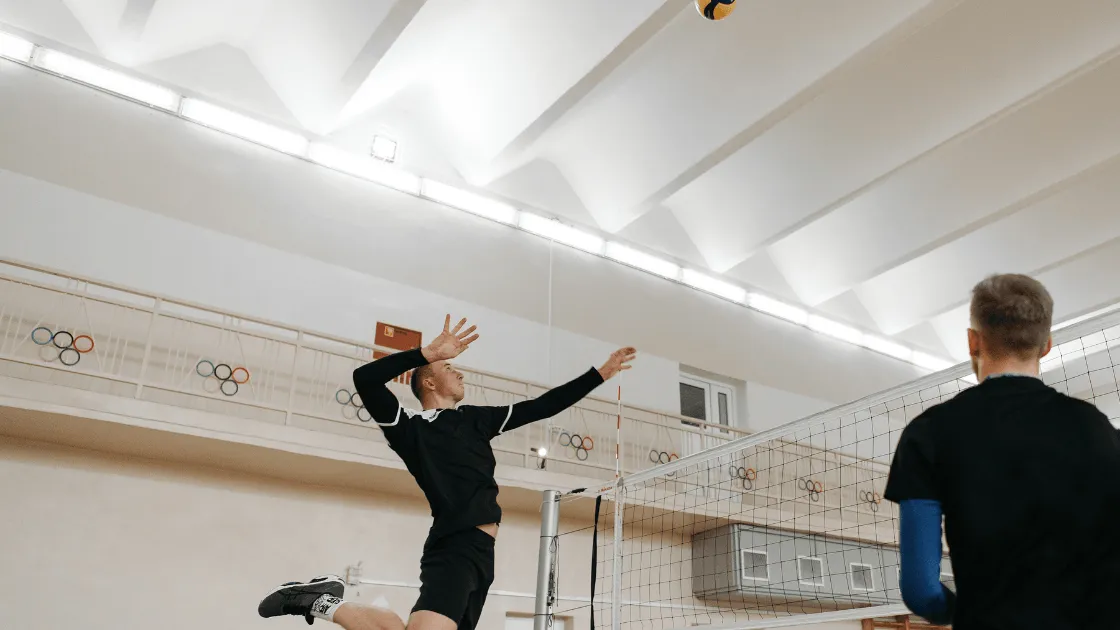
How it works: Players begin at the net with a block jump. After landing, they quickly move back using crossover or backpedal steps and transition into a full hitting approach. This drill trains quick recovery and attack readiness.
2. Setter Movement Drill
Purpose: Builds control and positioning for out-of-system plays.
How it works: Setters start in position and move quickly to chase off-target passes. They focus on setting the ball while keeping their body balanced and facing the intended target.
3. Agility Ladder Footwork Drill
Purpose: Improves foot speed, coordination, and rhythm.
How it works: Players perform quick foot patterns, such as in-in-out-out, through an agility ladder. The focus is on fast but controlled movements to improve footwork efficiency.
4. Resistance Band Shuffle Drill
Purpose: Develops lateral strength and explosive movement.
How it works: Players place a resistance band around their legs and perform lateral shuffles in a low stance. The resistance increases muscle activation and improves push-off strength.
5. Cone Movement Drill
Purpose: Enhances court coverage and direction changes.
How it works: Cones are placed around the court, and players move from the center to each cone using different movement patterns such as sprinting, shuffling, or backpedaling. This drill simulates real-game movement.
6. Shadow Defense Drill
Purpose: Improves reaction speed and endurance.
How it works: Players stay in a low stance and move in all directions as if reacting to a ball. This drill builds muscle memory and prepares players for defensive situations.
Common Footwork Mistakes to Avoid in Volleyball
- Standing Flat-Footed: If you are standing flat on your heels, you will react more slowly, so stay light on the balls of your feet and ready to move.
- Crossing Your Feet Too Much: Crossing your feet when you do not need to can throw off your balance and slow you down, especially during quick plays.
- Too Big or Too Small Steps: If your steps are too wide or too short, your movement becomes inefficient, so aim for quick, controlled steps.
- Dragging Your Feet: If you’re dragging your feet instead of lifting them, you’re making yourself slower and less responsive. So, lift your feet to stay active and light as you move.
- Leading with the Wrong Foot: Using the wrong foot while moving can mess up your positioning, so focus on staying aligned with the direction you want to go.
- Skipping the Split Step: If you skip the split step, you lose that quick reaction advantage, so always stay ready to move in any direction.
- Overreaching Instead of Moving: Reaching for the ball instead of moving your feet reduces control, so take those extra steps to get into the right position.
- Bringing Your Feet Too Close Together: When your feet come too close, you lose balance and stability, so keep a solid, athletic stance at all times.
Conclusion
Improving your movement on the court starts with practicing the right volleyball footwork drills consistently. Good footwork helps you move faster, stay balanced, and perform skills more effectively during matches!
For structured coaching, advanced training programs, and athlete development, explore our academy and take your game to the next level.
FAQs:
1. How often should I practice volleyball footwork drills?
You should practice volleyball footwork drills about three to five times per week. Even short sessions of 15 to 20 minutes can help improve movement, balance, and reaction speed over time.
2. Can footwork drills improve passing and defense?
Yes, better footwork helps you get into the right position faster, which leads to more accurate passes and stronger defensive plays during games.
3. Are these drills suitable for beginners?
Yes, the footwork drills for beginners are simple and focus on basic movement. They help new players build coordination, balance, and confidence on the court.
4. Do footwork drills help prevent injuries?
Yes, proper footwork reduces unnecessary strain on joints. It improves balance and control, which lowers the risk of common injuries in the knees, ankles, and hips.
5. Can I practice footwork drills without a ball?
Yes, many volleyball footwork drills focus on movement only. You can practice using cones, ladders, or even open space without needing a ball.
6. What is the most important footwork skill?
Quick first steps and staying balanced are the most important skills. They help you react faster and stay in control during both offense and defense.
7. How long does it take to see improvement?
Most players start noticing improvement within a few weeks if they practice consistently and focus on proper movement technique.
8. Are these drills used in competitive training?
Yes, these footwork volleyball drills are used at all levels, including competitive and professional training programs, to improve speed, control, and performance.