Talk to us

If you want to improve your volleyball performance, you cannot rely on practice alone. You need the right workout drills for volleyball that build strength, speed, and control. Whether you are a beginner or an advanced player, structured volleyball workout drills help you move better, jump higher, and stay consistent on the court.
Let’s break down the drills that actually make a difference.
What are Volleyball Workout Drills?
Workout drills for volleyball are exercises designed to improve your physical abilities for the game. These drills focus on strength, agility, endurance, and explosive power. Unlike skill drills that focus on passing or hitting, volleyball workout drills prepare your body to perform those skills effectively. They train how you move, jump, react, and recover during a match.
Why Do Workout Drills Matter in Volleyball?
Workout drills are the foundation behind every great play in the following ways:
-
Injury Prevention
Volleyball involves constant jumping, landing, and sudden movements. Without proper conditioning, this can put stress on your knees, ankles, and shoulders. Workout drills help strengthen the muscles around these joints, making your body more stable and less prone to injuries.
-
Technical Skill Improvement
You cannot rely on matches alone to improve your skills. Drills give you a controlled environment where you can repeat specific movements like footwork, arm swings, or blocking techniques. Over time, this repetition builds muscle memory, so your actions become automatic during a game.
-
Physical Conditioning and Power
Power is a big part of volleyball. Whether it is jumping for a block or hitting a strong spike, your body needs to generate force quickly. Workout drills build that explosive strength while also improving overall endurance so you can maintain performance throughout a match.
-
Agility and Reaction Time
A lot of what happens in volleyball is unpredictable. The ball can change direction quickly, and you often have just seconds to respond. Drills that focus on quick movements and reflexes train your body to react faster, giving you an edge on the court.
-
Consistency and Mental Readiness
Training regularly with drills builds rhythm. Your movements become more automatic, which reduces hesitation during games. At the same time, structured workouts improve focus and discipline, helping you stay mentally prepared in high-pressure situations.
Enjoying these drills? If you want to build a complete practice routine, explore our full range of drills.
Key Principles for Effective Volleyball Training
To get the most out of your workout drills for volleyball, keep these key principles in mind:
-
Sport-Specific Movements
Your training should match what actually happens in a volleyball game. That means focusing on movements like jumping, shuffling, diving, and quick turns. General fitness helps, but sport-specific drills make your training more useful on the court.
-
Explosive Power Focus
Volleyball relies heavily on short bursts of energy. Whether it is a spike or a block, you need quick power rather than slow strength. Exercises like jump squats, box jumps, and sprint drills help build this explosive ability.
-
Balanced Muscle Development
It is easy to focus only on the muscles you use the most, like your legs. But neglecting other areas can lead to imbalances. A good workout plan includes your core, upper body, and stabilizing muscles so your entire body works together efficiently.
-
Proper Warm-Up and Cool-Down
Jumping straight into intense drills can increase the risk of injury. A proper warm-up prepares your muscles and joints for movement. Similarly, cooling down after training helps your body recover and reduces stiffness for the next session.
-
Progressive Overload
If you keep doing the same drills at the same intensity, your progress will slow down. Gradually increasing the difficulty, whether through more repetitions, higher jumps, or faster movements, helps your body keep improving.
-
Good Form Over Speed
It is tempting to rush through drills, especially when you want to improve quickly. But poor form can lead to bad habits and even injuries. It is better to perform each movement correctly at a controlled pace before trying to increase speed.
-
Recovery and Rest
Training every day without rest might seem like dedication, but it can actually slow you down. Your muscles need time to repair and grow stronger. Rest days and proper sleep are just as important as the drills themselves.
Essential Workout Drills for Volleyball
Now, let’s get into the drills you can start using right away. These volleyball workout drills are divided by skill level so you can train at your own pace.
Volleyball Workout Drills for Beginners
If you are just starting, these drills help you build strength, coordination, and confidence.
-
Bodyweight Squats
Bodyweight squats are one of the first exercises you should start with if you are new to volleyball training. They help you build strength in your legs, which is needed for jumping, quick movements, and staying balanced on the court.
Purpose:
- Strengthen your legs
- Improve jumping ability
- Build balance and control
How It Works:
Stand with your feet shoulder-width apart. Keep your chest up and slowly lower your hips like you are sitting on a chair. Go down until your thighs are parallel to the ground. Pause for a second and then push back up through your heels. Do 3 sets of 12 to 15 reps.
-
Jump Rope
Jump rope is simple but very useful. It helps you improve stamina, coordination, and foot speed, which are all important when you are moving around the court.
Purpose:
- Improve stamina
- Build coordination
- Strengthen lower legs
How It Works:
Hold the rope handles beside your hips. Swing the rope over your head and jump lightly as it passes under your feet. Try to stay relaxed and land softly. Do 3 rounds of 1 to 2 minutes.
-
Forward and Backward Lunges
Lunges help you work on one leg at a time, which is how you actually move during a match. This improves your balance and control.
Purpose:
- Build leg strength
- Improve balance
- Increase stability
How It Works:
Step forward into a lunge and lower your body until your knee is just above the ground. Push back to the start. Then step backward into a reverse lunge. Repeat on both legs. Do 3 sets of 10 to 12 reps per leg.
-
Wall Sit
Wall sits may look easy, but they really test your leg strength and patience. This helps you stay strong during long rallies.
Purpose:
- Improve leg endurance
- Build control
- Strengthen posture
How It Works:
Stand with your back against a wall and slide down until your knees form a right angle. Hold this position without moving. Aim for 30 to 60 seconds. Repeat 3 to 4 times.
-
High Knees
High knees are great for getting your heart rate up while also improving your speed and coordination.
Purpose:
- Increase speed
- Improve coordination
- Build stamina
How It Works:
Run in place while lifting your knees as high as you can. Keep your arms moving as well. Do 3 rounds of 30 to 45 seconds.
-
Plank Hold
The plank helps you build a strong core, which is needed for balance, stability, and powerful movements.
Purpose:
- Strengthen core
- Improve balance
- Build control
How It Works:
Place your forearms on the ground and extend your legs behind you. Keep your body in a straight line. Hold this position for 30 to 60 seconds. Focus on keeping your core tight.
-
Lateral Shuffles
Volleyball is not just forward and backward movement. You also need to move quickly side to side, and this drill helps with that.
Purpose:
- Improve side movement
- Build agility
- Increase reaction speed
How It Works:
Get into a low stance and shuffle to one side for a few steps, then go back the other way. Stay low and in control. Do 4 to 5 rounds of 20 to 30 seconds.
-
Calf Raises
Your calves play a big role in jumping and landing. This exercise helps you build strength in that area.
Purpose:
- Strengthen calves
- Improve jumping
- Support ankle stability
How It Works:
Stand straight and slowly rise onto your toes. Hold for a second, then come back down. Do 3 sets of 15 to 20 reps.
Advanced Volleyball Workout Drills for Performance
Once you build a strong base, these advanced volleyball workout drills help improve power, speed, and performance under pressure.
-
Box Jumps
Box jumps help you build explosive power, which is needed for spikes and blocks.
Purpose:
- Improve vertical jump
- Build power
- Increase coordination
How It Works:
Stand in front of a box. Bend slightly and jump onto the box. Land softly with bent knees. Step down carefully. Do 3 sets of 8 to 10 reps.
-
Depth Jumps
This drill trains your body to react quickly after landing, which helps improve your jump performance.
Purpose:
- Improve reaction strength
- Increase jump height
- Build explosiveness
How It Works:
Stand on a box and step off. As soon as you land, jump up again as quickly as possible. Keep ground contact short. Do 3 sets of 8 to 10 reps.
-
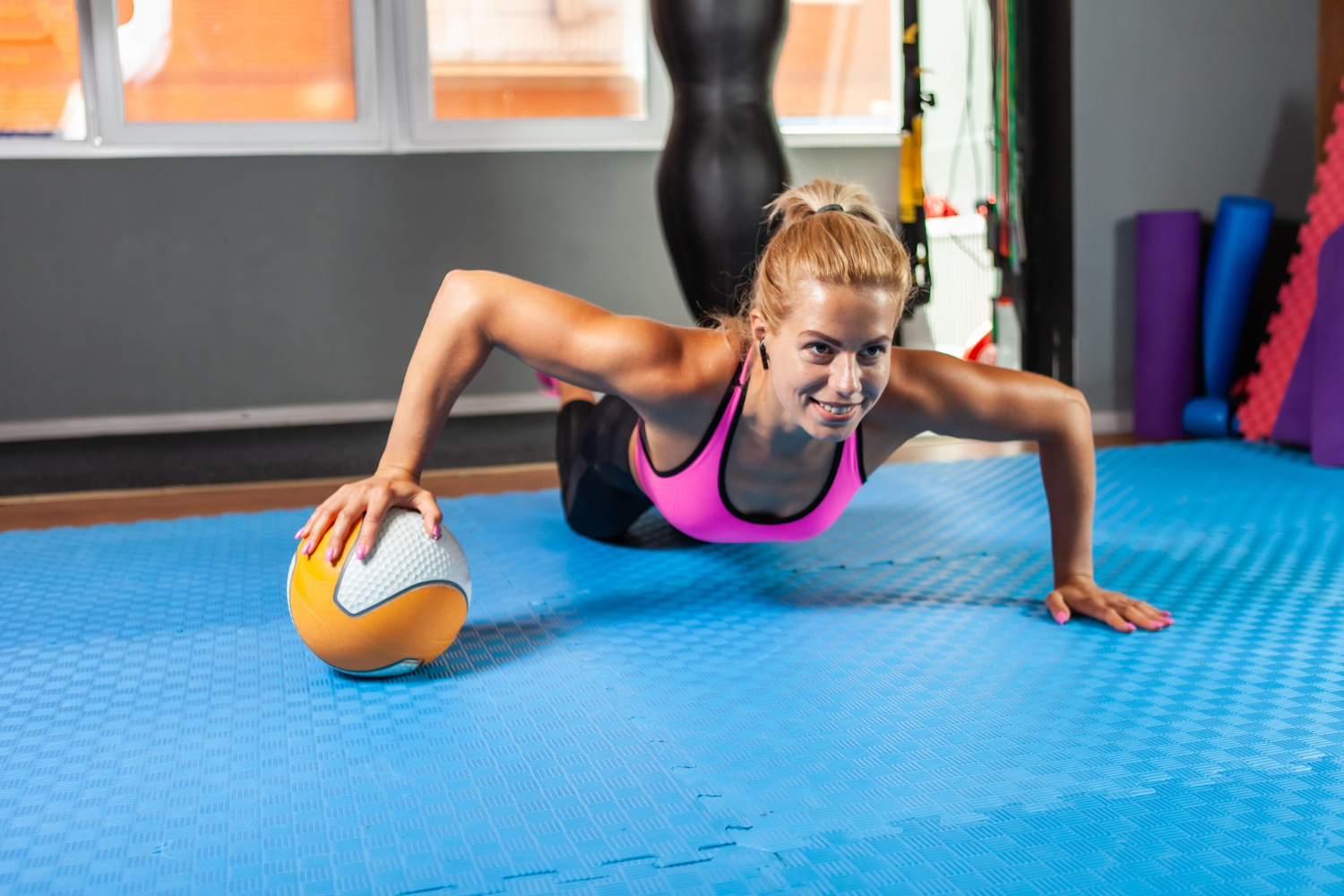
Medicine Ball Slams
This is a full body exercise that helps you build power for actions like spiking.
Purpose:
- Build upper body strength
- Improve core power
- Increase explosiveness
How It Works:
Hold a medicine ball overhead and slam it down with force. Pick it up and repeat. Do 3 sets of 12 to 15 reps.
-
Agility Ladder Drills
These drills help you move faster and with better control on the court.
Purpose:
- Improve foot speed
- Build coordination
- Enhance movement control
How It Works:
Use an agility ladder and perform different footwork patterns like stepping in and out of the squares. Stay quick and controlled. Do 3 to 5 rounds.
-
Sprint Intervals
Sprinting helps you build speed and stamina, which you need during matches.
Purpose:
- Improve speed
- Build stamina
- Increase recovery ability
How It Works:
Sprint for 20 to 40 meters at full effort. Rest for 30 to 60 seconds. Repeat for 6 to 8 rounds.
-
Resistance Band Squats
Adding resistance makes your squats more challenging and improves strength.
Purpose:
- Build leg strength
- Improve stability
- Increase power
How It Works:
Place a resistance band above your knees and perform squats while keeping tension on the band. Do 3 sets of 12 to 15 reps.
-
Single-Leg Balance Jumps
This drill helps you improve balance and control, especially during landings.
Purpose:
- Improve balance
- Strengthen stabilizers
- Reduce injury risk
How It Works:
Stand on one leg and jump forward. Land on the same leg and hold your balance. Do 3 sets of 8 to 10 reps per leg.
-
Burpees
Burpees are intense but very useful. They work your whole body and improve your fitness level.
Purpose:
- Build stamina
- Improve strength
- Increase speed
How It Works:
Start standing, drop into a squat, move into a plank, do a push-up, jump back up, and explode into a jump. Do 3 sets of 10 to 15 reps.
Common Errors to Avoid During Volleyball Workouts
Even the best workout drills for volleyball won’t deliver results if you make avoidable mistakes. Here are some common errors to watch out for so you can train smarter and stay consistent.
-
Skipping Warm-Ups
Many players treat warm-ups as optional, especially when short on time. This often leads to tight muscles and a higher chance of injury. A few minutes of proper preparation can make a big difference in how your body performs.
-
Poor Landing Technique
Jumping is only half the action. Landing correctly is just as important. Hard or unbalanced landings put pressure on your knees and ankles. Training yourself to land softly and with control can protect you in the long run.
-
Overtraining
Doing more is not always better. Training too often without enough recovery can lead to fatigue, reduced performance, and even injuries. Listening to your body is important. If you feel constant soreness or exhaustion, it may be time to slow down.
-
Ignoring Core Strength
Your core plays a key role in almost every movement, from jumping to hitting. Weak core muscles can affect your balance and power. Adding core-focused exercises to your routine can improve overall performance.
-
Focusing Only on Legs
While strong legs are important, volleyball is a full-body sport. Your arms, shoulders, and back are equally involved in actions like serving and spiking. A well-rounded workout should train your entire body, not just one part.
Closing Thoughts
In the end, improving at volleyball comes down to showing up consistently and putting in the right kind of effort. Start with drills that match your level, focus on good form, and build up gradually as your confidence grows. If you stay patient and keep practicing, you will start to see real progress in how you move and play on the court.
Ready to take your training to the next level? Explore our academy and start building your game with purpose.
FAQs
-
How many times a week should I train with volleyball workout drills?
Training around 3 to 5 times per week works well for most players. Adjust based on your intensity and recovery.
-
Are these drills appropriate for younger athletes?
Yes. Just scale the intensity and focus on building proper form and coordination.
-
Do these workouts help improve volleyball skills?
Yes. They support better performance by improving strength, speed, and endurance.
-
What is the ideal duration of a volleyball workout session?
Most sessions last between 45 and 75 minutes, including warm-up and recovery time.
-
Is weight training beneficial for volleyball players?
Yes. Strength training improves power and helps prevent injuries.
-
Can I do workout drills for volleyball without any equipment?
Yes. Many effective drills rely only on bodyweight movements like squats, planks, and sprints.
-
Which drills are best for increasing vertical jump?
Box jumps and resistance-based jump drills are great for improving jump height.
-
Can I practice these drills on my own?
Yes. Many of these exercises are perfect for solo training sessions.
-
How are workout drills different for beach volleyball?
Beach volleyball focuses more on endurance, balance, and leg strength due to sand resistance.
-
When is it time to stop a workout?
Stop if you feel pain, dizziness, or extreme fatigue. Recovery is essential for long-term progress.