Talk to us

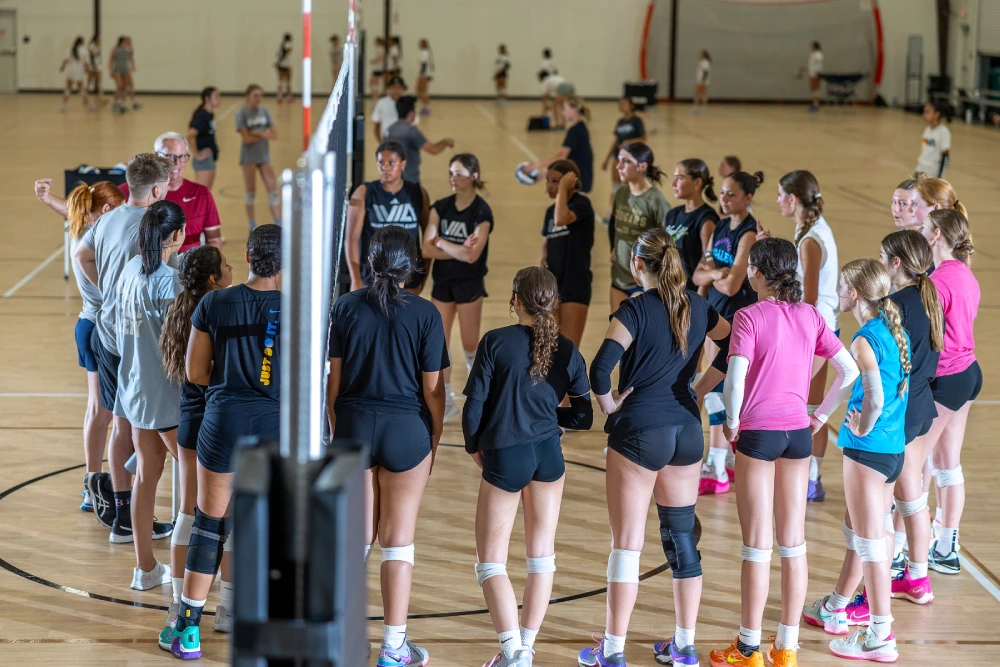
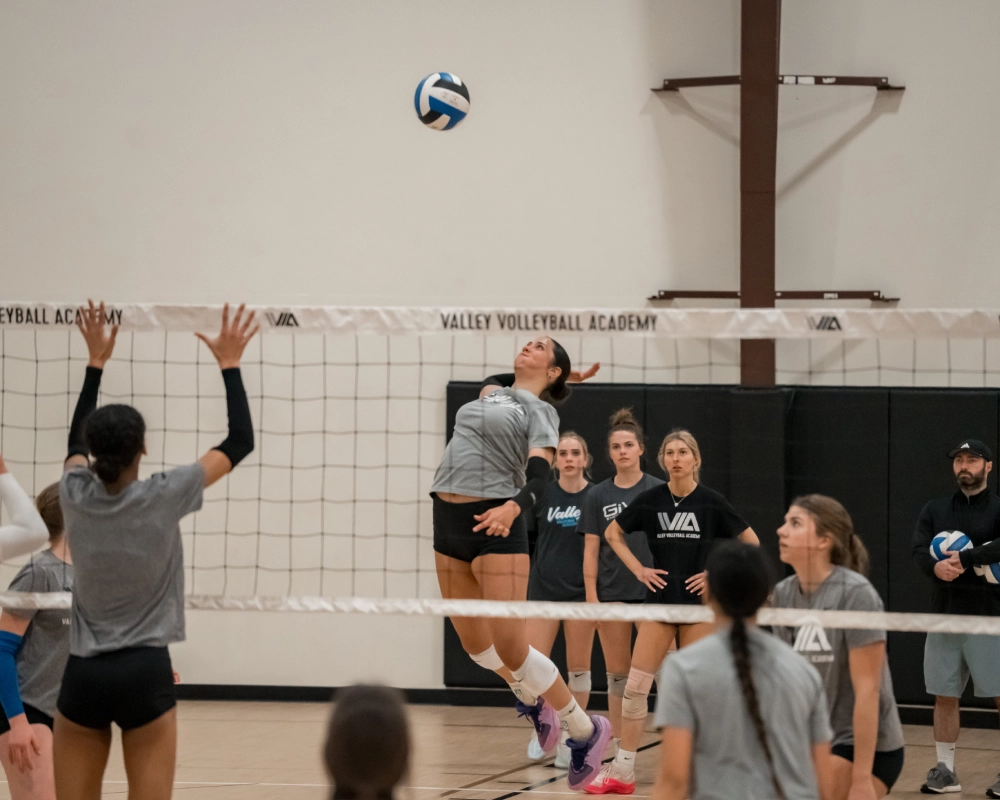
Is your child looking to level up their volleyball skills in Fresno? Maybe you are a beginner or a parent hoping to build confidence in your young athlete. At Valley Athletics, we break down each volleyball drill so every player, from rookie to future champion, can learn, grow, and enjoy the game. The right volleyball practice drills help build confidence, improve skills, and develop a stronger all-around athlete while keeping the experience fun and engaging.
What Are Volleyball Practice Drills?
Volleyball practice drills are structured exercises designed to build essential skills like passing, setting, hitting, and serving. These activities help players practice game-like movements, boost coordination, and prepare for real competition. From fun challenges for kids to high-intensity routines for advanced teams, there’s a drill for every level.
Players use volleyball drills for practice to improve:
- Ball control
- Footwork
- Timing
- Strength and conditioning
- On-court coordination
Whether you’re improving your serve or learning to dig for the first time, drills give you the consistent reps needed to grow.
Why Are Volleyball Practice Drills Important?
Whether you’re a first-timer or an experienced hitter, practice drills are the secret to getting better, faster. Here’s why:
- Sharpening core skills: Repetition and constant practice make your passes, sets, and hits stronger.
- Muscle memory: Your body learns technique so you can react quickly in the moment.
- Ball control: Control of the ball leads to fewer mistakes and more points.
- Increased fitness: Drills keep the heart rate up and make the players
- Improved reaction time: Fast-paced drills boost your on-court awareness.
- Confidence boost: Nailing a skill in practice means showing off in a game.
- Enhanced teamwork: Many drills require communication and team effort.
- Better game understanding: Drills break down real-game situations, and you can play better in actual matches.
- Versatility: Practicing all the skills you’ll use in actual matches helps build versatile players, ready for any situation.
Core Principles of Effective Volleyball Practice
To get the most out of each session, athletes and parents should remember these tips:
- Focus on Form: Good technique matters more than speed.
- Communication: Always talk on the court, call for the ball, and connect with teammates.
- Footwork First: Move your feet before you move your arms.
- Consistency: Repetition builds reliability, on and off the court.
- Awareness: Know where the ball and your teammates are at all times.
Volleyball Practice Drills
Here are some of the best drills for volleyball practice, starting with beginner-friendly options and moving into advanced, game-ready drills.
Volleyball Practice Drills for Beginners
If you’re new to volleyball or coaching young athletes, start here. These volleyball practice drills for beginners build confidence and a strong foundation.
-
Toss, Pass, Catch
- Purpose: Helps players master passing form and wrist control.
- How it works: Players need to face a partner or wall. Toss the ball, pass it back, then catch. Repeat with consistent technique.
-
Shuffle and Dig
- Purpose: Strengthens defensive footwork and teaches players to stay low.
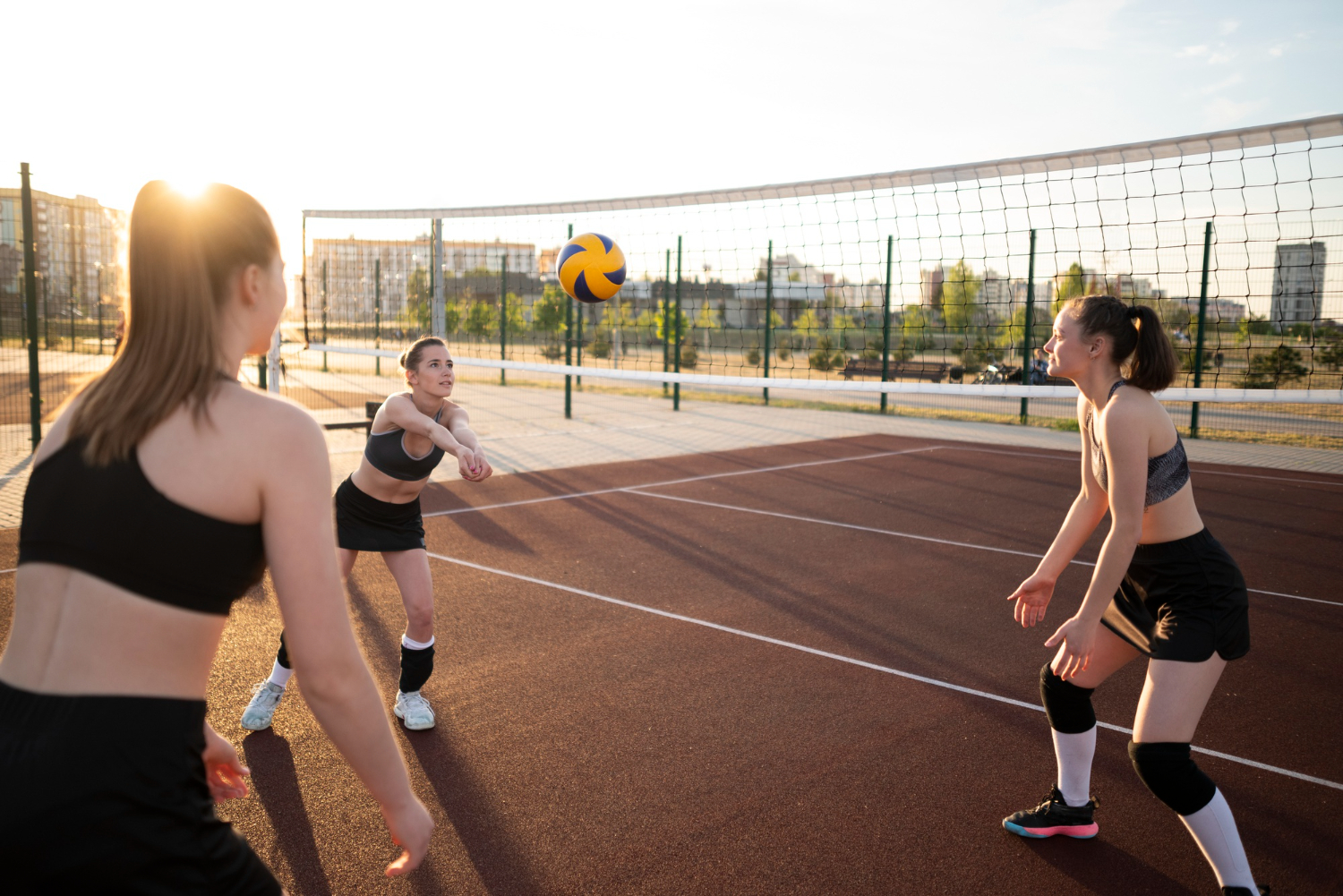
- How it works: One player shuffles sideways while a partner sends balls to dig.
-
Low Catch Passing
- Purpose: Builds comfort staying in a deep defensive stance.
- How it works: The ball needs to be tossed high, let it bounce once, then catch it near the floor.
-
Self-Toss Setting
- Purpose: Develops setting motion and touch.
- How it works: Toss the ball above your head, set it to yourself, and repeat.
-
Partner Setting
- Purpose: Improves accuracy and timing between two players.
- How it works: Players stand a few feet apart, setting the ball back and forth.
-
Fizzles
- Purpose: Trains soft, controlled setting and ball feel.
- How it works: Toss high, set low three times, then finish with one high set.
-
Pepper
- Purpose: Boosts reflexes, coordination, and ball control.
- How it works: In pairs or small groups, cycle through dig-set-hit continuously.
-
3-Person Pepper
- Purpose: Adds movement and teamwork under a net-like scenario.
- How it works: One player feeds, one passes, one sets, then rotate with quick transitions.
Advanced Volleyball Practice Drills
These advanced drills are perfect for players who already understand the basics and want to sharpen their competitive edge, improve court decision-making, and perform under pressure.
-
Hitting Survivor
- Purpose: Builds hitting endurance, power, and consistency during high-intensity play.
- How it works: Players take repeated approach jumps and hits while coaches or teammates feed rapid balls. The drill continues without breaks, pushing athletes to maintain strong form even when tired.
-
5-3-5-3-5 Passing Drill
- Purpose: Improves focus, accuracy, and consistency in serve receive.
- How it works: Players must complete streaks of perfect passes, first 5 in a row, then 3, then another 5. Any imperfect pass restarts the sequence. Coaches serve balls at varying speeds to increase difficulty.
-
Queen of the Court
- Purpose: Builds competitiveness, fast decision-making, and team chemistry.
- How it works: Small teams rotate through quick matches. If you win the rally, you stay on the “queen” side. Losing teams rotate out. The team that holds the court the longest wins.
-
Advanced Blocking Drills
- Purpose: Sharpens timing, footwork, and hand placement for effective blocks.
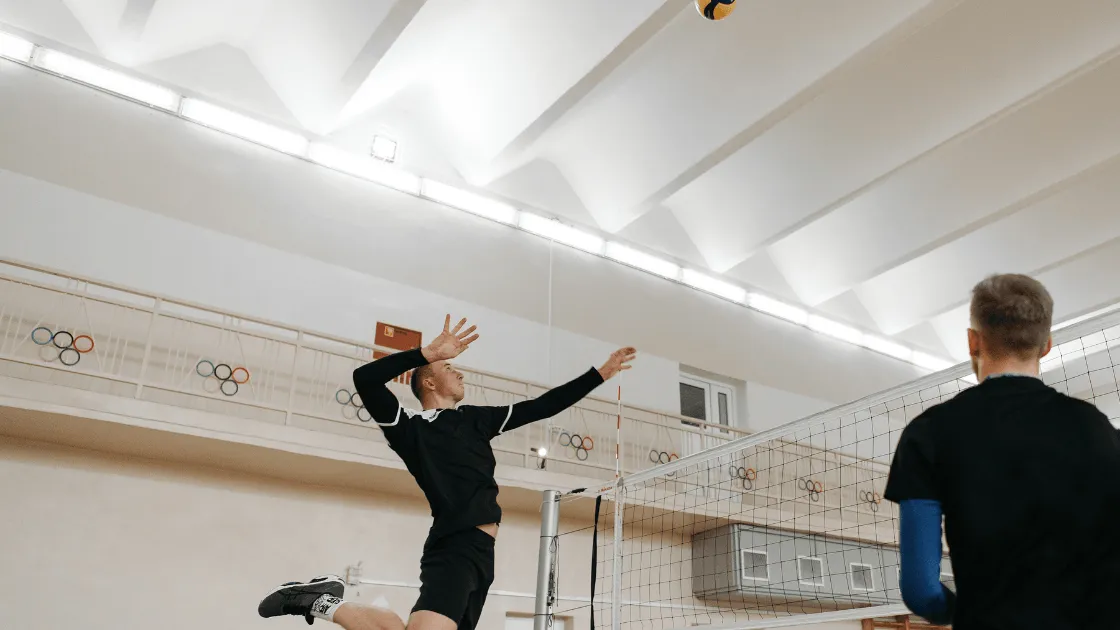
- How it works: Players move through blocking patterns such as shuffle-block, swing-block, and read-block while coaches simulate attacks from various angles. Focus is on reacting quickly and closing the block.
-
One Arm Series
- Purpose: Strengthens body control, stability, and ball touch.
- How it works: Players must pass or hit using only one arm while performing movement patterns like lateral shuffles or skaters. The challenge improves precision and focus.
-
Multi-Offense & Out-of-System Drills
- Purpose: Helps players stay calm, creative, and effective during broken plays.
- How it works: Coaches intentionally send imperfect passes or chaotic balls into play. Setters and hitters must run attacks from tough positions, practicing quick decision-making under pressure.
-
Big 3 Drill
- Purpose: Trains players to perform in high-pressure late-game moments.
- How it works: Teams start at a tied score, usually 22–22. To win, one side must score three points in a row. Every point feels high-stakes, teaching players composure and discipline.
-
3 C’s Drill (Communication, Coverage, Celebration)
- Purpose: Reinforces teamwork, vocal calling, and supportive team culture.
- How it works: Teams scrimmage while coaches score players not only on skill but on loud communication, proper coverage behind hitters, and positive celebration after each effort.
-
Serve Receive Drills
- Purpose: Builds reliability and confidence in passing against diverse serves.
- How it works: Coaches mix in float serves, topspins, short serves, and deep serves. Players aim for perfect passes to the target while maintaining proper platform angle and footwork.
Common Volleyball Practice Mistakes
Even the best volleyball practice drills won’t help if players overlook the basics. These are the most common mistakes we see at Valley Athletics and how to avoid them.
-
Ignoring Footwork
Footwork is the foundation of every skill in volleyball. If players only rely on their arms, they end up reaching, mistiming plays, and losing control of the ball. Good footwork puts your body in the right position before contact.
Fix it: Take small, quick steps. Stay balanced. Always move your feet to the ball instead of leaning toward it.
-
Poor Communication
Volleyball is a team sport, and silence is one of the biggest reasons rallies break down. When players hesitate to call the ball, two things happen: no one goes for it, or two people collide.
Fix it: Call “Mine!” early, loud, and confidently. Use names. Talk through plays. The more your team communicates, the smoother the game feels.
-
Inconsistent Stance
Standing tall may feel comfortable, but it slows reaction time. A high stance reduces stability, makes it harder to shift direction, and limits strong passes or digs.
Fix it: Bend your knees, keep your weight forward, and stay ready to move. A low, athletic stance helps you react faster and control the ball better.
-
Neglecting Warm-Ups
Skipping warm-ups might save a few minutes, but it often leads to sloppy movements and increased risk of injury. Volleyball involves quick jumps, fast changes in direction, and dynamic arm motion, none of which your body should perform cold.
Fix it: Spend at least 8–10 minutes warming up. Include jogging, shuffles, arm circles, and mobility stretches to activate your muscles.
-
Lack of Focus
Going through drills without intention leads to slow improvement. When players only “go through the motions,” they miss the small technique details that actually matter.
Fix it: Set one goal per drill, stronger platform, quicker footwork, cleaner set, louder communication. Focus on quality, not just finishing reps.
Volleyball isn’t just about hitting hard or diving for the ball; it’s about building the right habits every time you step on the court. With these volleyball practice drills, athletes in Fresno can sharpen their skills, boost their confidence, and prepare for real game pressure.
At Valley Athletics, we believe every athlete has the potential to grow, on and off the court.
If you’re ready to level up, drop by our Fresno facility, join a training session, or sign up for our academy.
FAQs
1. How often should volleyball players practice drills?
Most players see results with 3–5 practice sessions per week. Even 20 minutes a day can make a real difference.
2. What’s the most important skill to focus on during practice?
Passing and communication come first. A good pass and a clear shout set up every winning play.
3. How can I make drills more game-like?
Add competitive scoring, time limits, or surprise serve patterns to ramp up the intensity.
4. Are these drills suitable for all ages?
Absolutely. Just adjust intensity and distance for younger or less-experienced players.
5. Should we focus on all drills every practice?
No need. Rotate drills based on what your team needs to work on and upcoming matches.
Key Takeaways
- Volleyball practice drills help players build core skills, confidence, and game awareness.
- Strong fundamentals, footwork, communication, and consistency are essential for success.
- Beginners should focus on simple passing, setting, and movement drills to build a solid base.
- Advanced players benefit from high-intensity, game-like drills that improve decision-making and pressure performance.
- Avoid common mistakes such as poor communication, weak footwork, skipping warm-ups, and lack of focus.
- Consistent, intentional practice leads to real improvement on the court.