Talk to us

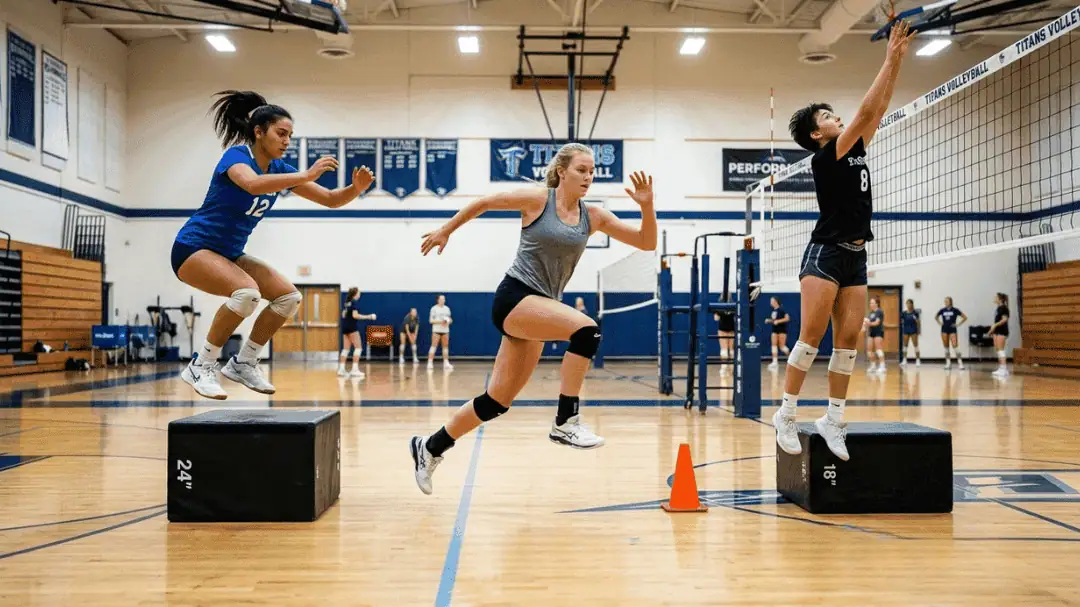
Volleyball is not just about power or height. It is about how well you move, react, and stay in control during every rally. That is where the right mix of volleyball drills makes a real difference. From improving your first touch to building explosive strength, structured training helps you become a more complete and consistent player.
In this guide, you will explore different types of volleyball drills, including ball control exercises and plyometric training. These drills are designed to help you improve accuracy, movement, and overall performance on the court. Whether you are a beginner or an advanced player, adding the right drills to your routine can elevate your game significantly.
What are Plyometrics in Volleyball?
Plyometrics are exercises that train your muscles to produce maximum force in a short amount of time. In volleyball, this shows up in actions like jumping for a spike, reacting to a block, or quickly shifting direction during a rally. These drills usually involve jumping, hopping, and bounding movements that help your body become faster and more explosive.
Why Are Plyometric Drills Important in Volleyball?
Here’s why plyometric drills are important in volleyball:
-
Increased Vertical Jump and Power
Every player wants a better jump. That part is obvious.
But what usually separates players is how easily they get into that jump. Some players look effortless. Others look like they are forcing it every time. Plyometric drills help with that push from the ground so your jumps feel cleaner and stronger.
-
Improved Agility and Speed
Matches don’t give you time to set yourself perfectly. You move, stop, shift again, and then react.
These drills get your body used to quick adjustments. After a point, you stop thinking about footwork. You just move where the ball goes.
-
Injury Prevention
A lot of issues in volleyball don’t come from jumping. They come from landing badly.
If your landings are stiff or off balance, your knees and ankles take the hit. Plyometric drills teach you to absorb that impact better. It is something you notice more over time than in a single session.
-
Muscle Conditioning
This is less about building size and more about how your muscles work together.
Movements start feeling smoother. You don’t waste energy on small adjustments. Even longer rallies feel a bit easier to handle.
Core Principles of Plyometric Drills in Volleyball
Before getting into drills, it helps to know what you are trying to train. The core principles of plyometric drills in volleyball include:
-
Stretch Shortening Cycle (SSC)
This is happening whether you realise it or not.
When you land, your muscles stretch slightly. If you jump again quickly, that stored energy helps you push off stronger.
You can think of it like a spring. The quicker and cleaner the movement, the better the result.
-
Rate of Force Development (RFD)
This sounds technical, but the idea is simple.
How fast can your body produce power when you need it?
In volleyball, you do not get time to prepare fully before every jump. You react based on the play. Faster force production means better performance in those moments.
-
Specificity
Training should look similar to what you do in a match.
If all your drills are straight up and down but the game involves side movement, quick turns, and approach steps, there is a gap.
Good plyometric training includes those patterns so your body gets used to them.
-
Minimal Ground Contact Time
Watch experienced players closely.
They land and move again almost immediately. There is no hesitation.
This is something you build over time. The goal is not to rush, but to reduce unnecessary delay between movements.
-
Proper Landing Mechanics
This is where most players need more attention.
A good landing is quiet, controlled, and balanced. Your knees bend naturally, your chest stays stable, and you are ready to move again.
If your landings are loud or shaky, that is usually a sign to slow things down and fix the basics.
Volleyball Plyometric Drills
Now let’s get into the actual drills. We will start with beginner level. Even if you are experienced, it is worth checking these because most players skip basics and that shows later.
Volleyball Plyometric Drills for Beginners
-
Learning to Land (Depth Drops)
Purpose:
This drill teaches your body how to absorb impact properly. It might not feel exciting, but it builds the base for everything else.How it works:
Stand on a low box or step. Around knee height or lower is fine. Step off gently. Do not jump.
As you land, focus on staying balanced. Your knees should bend, your hips move slightly back, and your feet should feel stable on the ground.
If the landing sounds loud, slow it down. The goal is control, not speed. -
Jump Squats
Purpose:
Builds lower body power and helps with explosive takeoff.How it works:
Start in a squat position. Push through your legs and jump upward.
When you land, go straight into the next squat. Do not stand fully upright between reps.
Keep the movement steady. If you start losing control, take a short break. -
Lateral Hops (Side to Side)
Purpose:
Improves side movement and ankle stability.How it works:
Use a line on the floor or place a small object. Jump sideways over it and come back immediately.
Stay light on your feet. If your movements feel heavy, reduce the pace and focus on control first. -
Two Footed Hops or Line Hops
Purpose:
Helps build quick reactions in your lower legs.How it works:
Stand over a line and perform small, fast hops. You can go forward and back or side to side.
Do not aim for height. Keep the jumps short and quick. The goal is rhythm and speed. -
Jump Rope
Purpose:
Improves coordination and prepares your lower legs for more intense drills.How it works:
Keep your jumps small and stay on the balls of your feet.
It may feel basic, but it builds a good foundation. Many players skip this and miss out on its benefits. -
Split Jump Lunges
Purpose:
Build strength and balance in each leg separately.How it works:
Start in a lunge position. Jump up and switch your legs mid air.
Land softly and keep your balance before the next rep. If you feel unstable, slow down and reset. -
High Knee Skips
Purpose:
Helps with approach movement and coordination.How it works:
Skip forward while driving your knee up. Use your arms naturally to maintain rhythm.
Focus on clean movement instead of speed. This drill works better when it is controlled.
Advanced Volleyball Plyometric Drills
Once the beginner drills start feeling natural and your landings are under control, you can move to these.
This is where intensity goes up. You will feel it more in your legs, and your timing needs to be sharper. If something starts feeling messy or rushed, it usually means you need to scale it back a bit.
-
High Box Depth Jumps
Purpose:
This drill pushes your reaction speed. It trains your body to handle impact and respond immediately.How it works:
Stand on a higher box than what you used earlier. Step off, land on both feet, and go straight into a vertical jump.Try not to “sit” on the landing. The moment your feet touch the ground, you should already be going up again.
If there is a pause or you feel stuck for a second, reduce the height. This drill only works when it stays quick.
-
Max Speed Approach Jumps
Purpose:
Connect your training to actual gameplay. This is as close as it gets to what you do in a match.How it works:
Go through your full approach. Three steps or four steps, whatever you normally use. Do it at full speed.Do not slow down before the jump. That habit shows up in games as well. Let your movement flow naturally into the takeoff.
You will notice that timing becomes just as important as power here.
-
Single Leg Intensive Hopping
Purpose:
Builds strength and control in each leg on its own. This helps during uneven landings or quick adjustments.How it works:
Stand on one leg and start hopping continuously. Keep the movement small and controlled.Stay slightly springy. If your heel keeps dropping flat, reset and focus again.
Most players realize one side feels weaker here. That is normal. Work on both sides evenly.
-
Lateral Hurdle Hops
Purpose:
Improves side to side explosiveness, especially useful for blocking and defensive movement.How it works:
Set up a few hurdles or small obstacles. Jump sideways over them one after another.Start with both feet. Once that feels steady, you can try single leg versions.
Keep your body balanced. If you start leaning too much, slow it down.
-
Weighted Jumps
Purpose:
Adds resistance so your muscles have to push harder during takeoff.How it works:
Use a light weighted vest or hold small dumbbells. Perform your usual jumps.The weight should not change your movement completely. If your jump becomes slow or heavy, reduce the load.
This works best in short sets.
-
Tuck Jumps or Reactive Jumps
Purpose:
Builds the ability to repeat jumps quickly without resetting each time.How it works:
Jump up and bring your knees toward your chest. Land and go straight into the next jump.The challenge here is maintaining form while staying quick.
If your jumps start getting uneven, stop and reset. This drill gets sloppy very fast if you push too long.
-
Bounding
Purpose:
Improves forward power and helps with overall movement strength.How it works:
Take long, powerful strides while moving forward. Try to stay in the air slightly longer between steps.Drive your knee up and push off strongly from the ground.
It might feel awkward in the beginning. That usually goes away after a few sessions.
Common Plyometric Drill Mistakes in Volleyball
Most players don’t realise they are making these until someone points it out.
-
Skipping Warm Up
Going straight into jumps without preparing your body is risky. Even a short warm up changes how your body responds.
-
Too Many Reps
Plyometric drills are not about volume. Once your jumps slow down or feel heavy, the quality is already dropping.
-
Poor Landing Mechanics
If your knees collapse inward or your landings feel stiff, you are building bad habits. This is where injuries usually start.
-
No Rest Between Sets
These drills need energy. If you rush through everything without breaks, you lose the benefit.
-
Advancing Too Quickly
Moving to advanced drills before your basics are solid usually leads to messy form. It might feel like progress, but it does not hold up in games.
-
Ignoring Strength Training
If your base strength is weak, plyometric gains stay limited. Both need to work together.
Closing Thoughts
Plyometric drills are one of those things where results don’t show overnight.
At first, it just feels like extra work. Then slowly, things start changing. Your jumps feel easier. You recover faster after landing. Movements that felt rushed earlier start feeling more controlled.
That is usually when you know it is working.
The main thing is not to rush through it. Stay consistent, keep your form clean, and let your body adapt at its own pace.
Want professional coaching and structured development? Join our academy and train with experienced coaches who help athletes maximize their potential.
FAQs
-
How often should volleyball players do plyometric drills?
Two to three sessions in a week is enough. Your body needs time to recover, especially when the drills are intense.
-
Are plyometric drills safe for youth volleyball players?
Yes, as long as they are supervised and kept simple. Younger players should focus more on control and landing rather than height or intensity.
-
How long does it take to improve vertical jump?
Most players start noticing changes in about six to eight weeks if they stay consistent.
-
Should plyometrics be done before or after practice?
It is better to do them early in your session when your energy levels are still high.
-
Do plyometric drills replace strength training?
No. Strength training builds your base. Plyometrics help you use that strength during quick movements.
-
What age should volleyball players start plyometric training?
Around 10 to 12 years old works fine, but only with basic drills and proper guidance.
-
Can plyometric drills help improve spike power?
Yes. Stronger and faster leg drive helps you jump higher and hit with more force.
-
Do plyometric drills improve lateral movement in volleyball?
They do. Side movement drills help you react faster during defense and blocking.
-
Should I do plyometrics during the season?
Yes, but reduce the volume. Focus more on maintaining your performance.
-
Can plyometric drills help prevent knee injuries in volleyball?
They can, if you focus on proper landing and control. Poor technique does the opposite.
-
What surface is best for volleyball plyometric training?
Wooden courts, turf, or rubber flooring are safer. Hard surfaces like concrete increase impact stress.
-
Can I combine plyometric drills with volleyball skill training?
Yes. Many players combine both to make their training feel closer to real match situations.